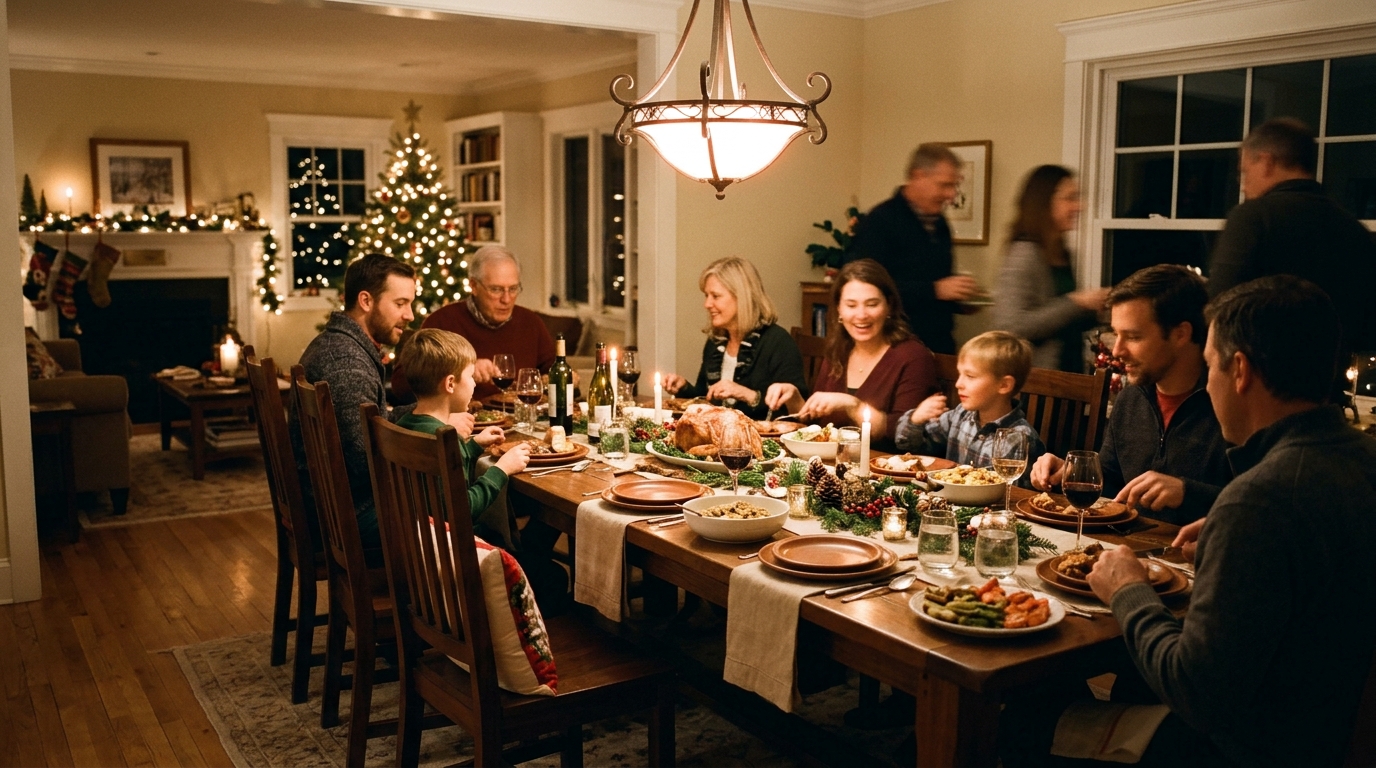
December 25 has more cardiac deaths than any other day of the year. December 26 ranks second, and January 1 ranks third. That's a striking pattern, especially when the family is gathered around the table and everyone is inclined to explain away a little chest discomfort.
Cold weather may add strain, but it doesn't account for the whole story. The more dangerous holiday habit's waiting. A person says it feels like indigestion, the family waits for dinner to end, and precious time slips away.
The American Heart Association's message is plain: possible heart attack symptoms call for 911, even on Christmas. The meal can be reheated. A person may not get another chance.
- ✓Chest pressure, shortness of breath, sweat, or nausea can signal a heart attack.
- ✓Don't wait until after dinner to call 911.
- ✓Keep regular medicines with you when you travel, and ask your doctor about missed doses.
Cold weather is only part of the holiday pattern
In mild Los Angeles County, about a third more heart-attack deaths occurred in December and January than from June through September. That makes temperature an incomplete explanation.
A New Zealand study looked at Christmas during that country's summer and still found about a 4% excess in cardiac deaths during the holiday period. The result doesn't prove that a particular meal or drink causes a heart attack. It points to several things happening at once: disrupted routines, travel, stress, food, alcohol, and delayed care.
In the U.S. research, the holiday increase was largest among people who died before reaching the hospital, in an emergency department, or as outpatients. Researchers said delays in seeking treatment may play a role. "I'll see how I feel after dinner" can be a costly plan.
The point isn't to blame Christmas or cancel the family meal. It's to make the emergency decision ahead of time, before a crowded room and a favorite tradition start bargaining with a symptom.
Know the signs people dismiss
Heart attack symptoms may arrive suddenly or build slowly. The American Heart Association lists chest discomfort, pressure, squeezing, fullness, or pain. Discomfort can also appear in one or both arms, the back, neck, jaw, or stomach. Shortness of breath, cold sweat, nausea, a rapid or irregular heartbeat, unusual tiredness, and lightheadedness are also warning signs.
Women can have the same chest discomfort as men. They may also have shortness of breath, nausea or vomiting, upset stomach, shoulder or back pain, and unusual tiredness or weakness. A person's sex, age, or fitness level doesn't make these symptoms safe to ignore.
A heart attack can begin with mild discomfort. If it eases and returns, take that seriously. Don't wait for unbearable pain, a collapse, or permission from the rest of the family.
Holiday houses are full of distractions: a gift to wrap, an oven to check, relatives to settle in. None of those jobs outranks a possible emergency.
What people mean by "holiday heart"
The phrase "holiday heart" usually refers to an abnormal rhythm, often atrial fibrillation, after heavy drinking. A 2024 study of 202 young adults found notable arrhythmias mostly during the recovery period after drinking. It doesn't tell us how every older adult will respond, but it does show that the heart can be affected after the last glass is empty.
Alcohol is only one piece. Less sleep, salty food, missed regular medicines, travel, emotional strain, and less movement can pile up. Keep your regular medicines with you when traveling. Ask your doctor what to do if a trip disrupts your routine, and don't double a missed dose unless a professional tells you to.
Five ways to make the holiday safer
1. Set the rule before dinner. If anyone has possible heart attack symptoms, someone calls 911. Nobody debates whether the meal can wait.
2. Find the nearest emergency department. Look it up before the celebration, especially in an unfamiliar town.
3. Go easy on alcohol. Don't turn one toast into a drinking contest, and don't drive after drinking.
4. Keep moving gently. A short walk after the meal can break up a long stretch in a chair if the weather and your health make it safe.
5. Listen to new symptoms. Chest pressure, shortness of breath, sweat, nausea, or unusual weakness deserves action, not an antacid and an argument.
The American Heart Association also advises staying active, managing stress, eating thoughtfully, and keeping up with prescribed medicines. Those habits matter all year, including the days when routines get crowded.
You don't need a perfect holiday plan. You can't predict every problem, but you'll know what to do.
You're not expected to diagnose anything. You don't have to debate the symptom, and you won't regret calling when you need help. It's better to be early than sorry.
When to call your doctor (or 911)
Nobody wants to be the one who brings an ambulance to Christmas dinner. But your family will forgive a false alarm a whole lot faster than a late call.
Fact-Checked Medical Sources
- American Heart Association: Winter Holiday Heart Attack Deaths ↗
- Circulation: The Merry Christmas Coronary and Happy New Year Heart Attack Phenomenon ↗
- Journal of the American Heart Association: Christmas Holiday Effect in New Zealand ↗
- European Heart Journal: MunichBREW II ↗
- American Heart Association: Warning Signs of a Heart Attack ↗
Last reviewed: November 2026 · Fact-checked & verified