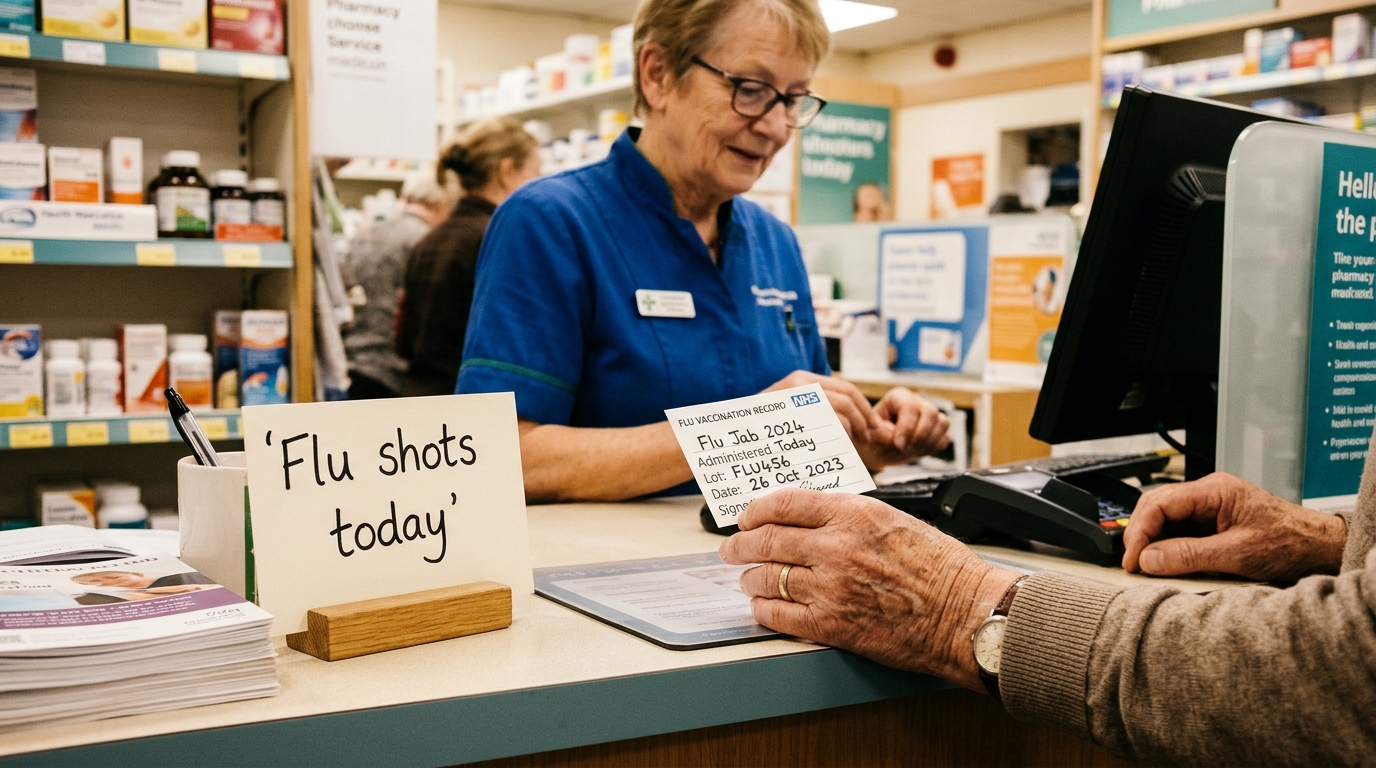
You're at the pharmacy for something else, with a list folded in your coat pocket. A sign near the counter says Flu. COVID. RSV. Then the person behind the register asks whether you want any of them today. You look at the three words and the card in your wallet. Which shots fit your age and your health?
Here is the plain-English answer. Flu vaccination is recommended every season for adults. An updated COVID vaccine is recommended for adults 18 and older. RSV vaccination is a one-time dose for everyone 75 and older, plus adults 50 to 74 who have a higher risk of severe RSV illness.
- ✓**Plan the flu shot.** Adults need one each season, with age-specific options after 65.
- ✓**Check your COVID record.** Adults 18 and older are advised to get an updated vaccine.
- ✓**Ask about RSV.** It's one dose for 75 and older, or 50 to 74 at higher risk.
Your age-by-age vaccine chart
This is the chart most families are really looking for. For RSV, "higher risk" can include chronic heart or lung disease, a weakened immune system, certain other medical conditions, or living in a nursing home.
| Age | Flu | COVID | RSV |
|---|---|---|---|
| 30 to 49 | One flu vaccine each season | Updated 2026 to 2027 vaccine recommended for adults 18 and older | No routine adult RSV recommendation for healthy people in this age group |
| 50 to 64 | One flu vaccine each season | Updated 2026 to 2027 vaccine recommended | One dose if age 50 to 74 and at increased risk |
| 65 to 74 | One flu vaccine each season, with a higher-dose, adjuvanted, or recombinant option preferred when available | Updated 2026 to 2027 vaccine recommended, with a second dose 6 months after the first | One dose if age 50 to 74 and at increased risk |
| 75 and older | One flu vaccine each season, with a higher-dose, adjuvanted, or recombinant option preferred when available | Updated 2026 to 2027 vaccine recommended, with a second dose 6 months after the first | One dose recommended |
No chart can account for every medical history. Immune conditions, prior doses, allergies, pregnancy, or a recent infection can change what your doctor recommends. Bring your vaccine record, or ask the pharmacy to look it up.
Age matters, but it isn't the whole story. People in one household may have different COVID schedules or RSV recommendations because of an immune condition or chronic disease. Check your record rather than copying a neighbor's list.
Flu: the 65-and-older difference
With rare exceptions, CDC recommends flu vaccination for everyone 6 months and older. For adults 65 and older, CDC and the Advisory Committee on Immunization Practices preferentially recommend a higher-dose inactivated, recombinant, or adjuvanted vaccine when one is available. If a preferred option isn't available, ask whether another age-appropriate flu vaccine can be given instead.
People ages 2 through 49 can get the nasal spray flu vaccine. Adults 50 and older shouldn't get that form. The 2026 to 2027 flu vaccines are trivalent, meaning they're designed around three influenza viruses.
September and October are generally good months for flu vaccination, but later vaccination can still be worthwhile while flu viruses are circulating and vaccine is available. A late appointment beats deciding the season has passed.
COVID: check the schedule, not your neighbor's
CDC recommends a 2026 to 2027 COVID vaccine for all adults 18 and older. The adult schedule isn't identical for every person, so the pharmacist will ask about previous doses, immune status, and recent infection.
For adults 65 and older, the current guidance calls for dose two 6 months after dose one. Don't guess at that interval if your medical history is complicated. Ask the pharmacist to check the current schedule, especially if you're immunocompromised or recently had COVID.
A recent infection doesn't automatically erase the vaccination recommendation. Timing can be individualized, so tell the pharmacist when symptoms began or when your test was positive. The schedule should match your history, not a one-size-fits-all calendar.
Flu and COVID vaccines can be given at the same visit when you're eligible and the timing is right. You can also ask whether RSV belongs at that visit instead of making three separate trips.
RSV: the one-time shot many people miss
RSV vaccination isn't an annual shot right now. CDC recommends a single dose for all adults 75 and older and for adults 50 to 74 at increased risk of severe RSV illness. If you've already received an RSV vaccine, including in a prior season, CDC says you shouldn't receive another dose at this time.
There's no routine adult RSV recommendation for a healthy person in the 30 to 49 age group. At 50 to 74, the question is your risk profile, not just your birthday. Ask about chronic heart or lung disease, immune problems, other medical conditions, and whether a nursing home setting changes your risk.
If you can't remember receiving an RSV vaccine, don't assume you need a repeat dose. The pharmacy or medical office may have a record, and CDC guidance says the RSV vaccine isn't currently repeated every season.
A late flu shot still counts
Missed October? The flu season isn't over. CDC says vaccination should continue throughout the season while viruses circulate and unexpired vaccine is available. COVID vaccination can be given according to the current schedule, and eligible adults can ask about getting more than one vaccine during a visit.
Medicare Part B covers seasonal flu and COVID vaccines. Medicare drug coverage, Part D, covers the RSV vaccine and other adult vaccines recommended by the Advisory Committee on Immunization Practices, with no copayment or deductible for covered recommended vaccines. Coverage details can differ by plan and setting, so show your Medicare card and ask before the visit is billed.
Put these questions in your phone
You don't need a perfect memory at the counter. Ask:
- Ask about the flu option. Which vaccine is available for my age, and is a preferred option available?
- Check the RSV record. Do my records show a dose already?
- Time the second COVID dose. If I'm 65 or older, when should it be scheduled?
- Save yourself a trip. Can I receive the vaccines due today at the same visit?
- Mention the details. Does my health history, allergy history, or recent infection change the plan?
A few minutes with the pharmacist may save you another trip. The pharmacist can check the record and tell you what belongs on your calendar. Write down the answer before you leave, especially if another dose is due later.
When to call your doctor (or 911)
Call your doctor or pharmacist if you have questions about a vaccine, a reaction, or a dose.
At the pharmacy counter, ask one plain question: which shot is due today, and which one belongs on a later date? Write the answer down before you leave.
Fact-Checked Medical Sources
- CDC: 2026 to 2027 Flu Season ↗
- CDC: Seasonal Influenza Vaccine Clinical Considerations ↗
- CDC: COVID-19 Vaccine Interim Clinical Considerations ↗
- CDC: RSV Vaccine Guidance for Adults ↗
- American Medical Association: What to Know About Flu, COVID-19, and RSV Immunizations ↗
- Medicare.gov: RSV Shot Coverage ↗
Last reviewed: November 2026 · Fact-checked & verified