Did Paul Revere Really Shout "The British Are Coming"?
The line everyone learned isn't in any of Revere's own accounts. What he did that night, in his own words, is a better story than the poem.
Sometime around midnight on April 18, 1775, a rider pulled up at the Reverend Jonas Clarke's house in Lexington, Massachusetts. Samuel Adams and John Hancock were staying inside. William Munroe, who was standing guard, told the rider not to make so much noise.
The rider was Paul Revere. Fifty years later, in a deposition dated March 7, 1825, Munroe recalled the answer: Revere told him he would have "noise enough before long," and that "The Regulars are coming."
That is as close as the record gets to the famous cry. Revere left three accounts of his ride, and "The British are coming" appears in none of them. What he did write tells a different story: the lanterns in the steeple were not meant for him, he never reached Concord, and he spent part of the night with a pistol pointed at him.
The version most of us learned
Most Americans met Revere through a poem. Henry Wadsworth Longfellow's "Paul Revere's Ride" opens with lines generations of schoolchildren could recite:
More American Memories
Explore Our "Remember When" Archive of Treasured Decades →"Listen, my children, and you shall hear / Of the midnight ride of Paul Revere, / On the eighteenth of April, in Seventy-Five"
In the poem, Revere waits across the river for a signal from the church tower: "One if by land, and two if by sea; / And I on the opposite shore will be, / Ready to ride and spread the alarm." Then he rides alone, village to village, all the way to Concord.
What the record shows
The Massachusetts Historical Society holds Revere's own words: a draft and a fair copy of a deposition he gave around 1775, and a letter he wrote around 1798 to Jeremy Belknap.
In the fair copy, Revere says Dr. Joseph Warren sent for him at about 10 o'clock that night and asked him "to go to Lexington, and inform Mr. Samuel Adams, and the Honl. John Hancock Esqr." that British soldiers were gathering at the bottom of Boston Common, where boats waited for them. The fear was that the troops would arrest the two leaders or march on to Concord "to distroy the Colony Stores." Warren had already sent a second rider, William Dawes, by land over Boston Neck.
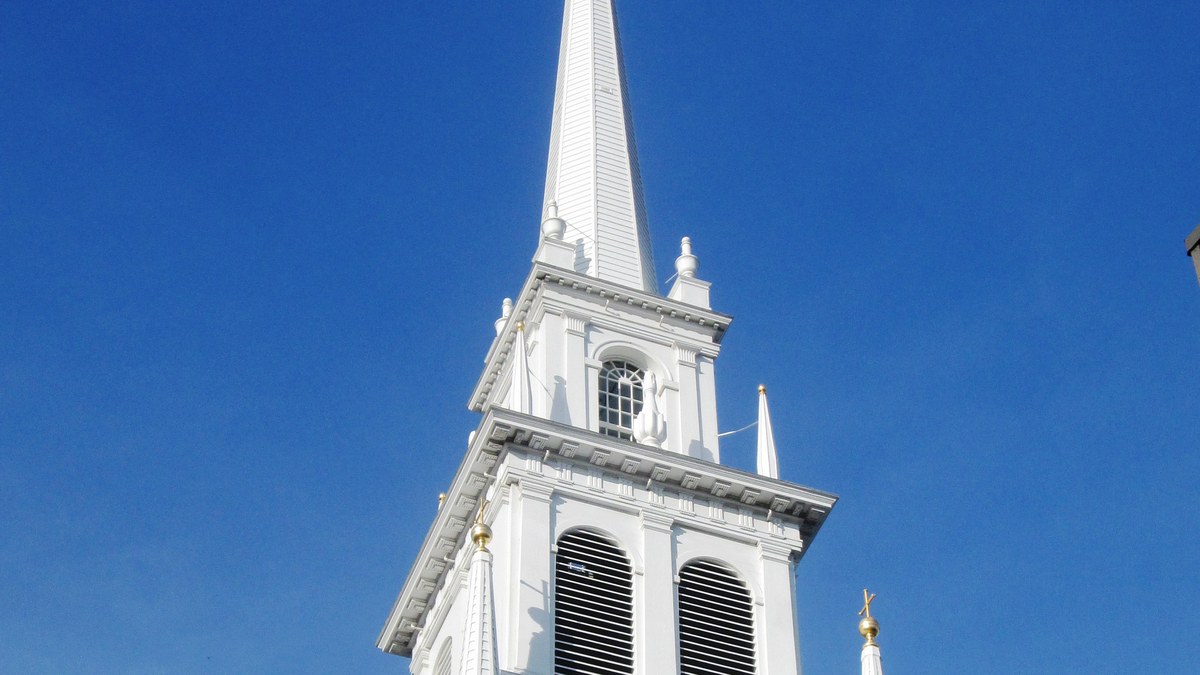
The lanterns were Revere's own arrangement, worked out in advance. In the Belknap letter he explains the code: "if the British went out by Water, we would shew two Lanthorns in the North Church Steeple; and if by Land, one, as a Signal; ..." The point was a backup. If Revere couldn't get out of Boston, patriots across the river would still know which way the troops were moving.
So he never waited for the lanterns. He asked a friend to hang them, then two men rowed him across the Charles River, past the British warship Somerset. "The moon was Rising," he wrote. In Charlestown he was told the signal had already been seen. He borrowed a horse from Deacon John Larkin and set out at about 11 p.m.
Why "the British" doesn't fit
There is a plainer reason the famous line is unlikely. In 1775 most colonists still thought of themselves as British subjects. The Library of Congress notes that many Americans considered themselves as English as their relatives across the ocean. Shouting "The British are coming" in a Massachusetts village would have been a little like shouting "The Americans are coming" in one today.
The word in Munroe's memory of the night is a different one: Regulars, meaning the king's troops. Even that memory comes in versions. The National Park Service prints it as "The Regulars are coming," while the Paul Revere House gives it as "The regulars are coming out." Both come from a man recalling a conversation half a century after it happened.
The ride that ended in a pasture
Dawes reached the Clarke house about half an hour after Revere. Accounts of the arrival times vary, from about 11:30 p.m. to 12:30 a.m. The two men set off for Concord together, and on the road they fell in with Samuel Prescott, whom Revere described as "a young Docter."
About halfway to Concord, a British patrol stopped them. Prescott, Revere wrote, "jumped his Horse over a low Stone wall, and got to Concord." Dawes got away too. Revere did not.
The officers questioned him with pistols drawn. In the fair copy of his deposition he says he told them "that I had alarmed the country all the way up, that their Boats, were catch'd a ground, and I should have 500 men their soon." When the patrol heard gunfire in the distance, they let him go but kept his horse. Revere walked back to Lexington and helped move Hancock's trunk of papers out of reach. The man who carried the alarm to Concord was Prescott.
Revere was also never alone. The National Park Service describes an alarm network already in place by March 1775, with watches in Roxbury, Cambridge, and Charlestown and riders ready to go. Revere and Dawes were the two men sent out of Boston. Many more carried the news from town to town.
Where the legend came from
On April 5, 1860, Longfellow visited Old North Church. According to the National Park Service, he began the poem the next day. It ran in the Boston Evening Transcript in December 1860 and in the January 1861 issue of The Atlantic Monthly, and in 1863 it appeared as "The Landlord's Tale" in his book "Tales of a Wayside Inn."
Longfellow was not writing history. The country was heading toward civil war, and the Park Service notes that he used Revere as a patriotic symbol for that moment. The poem gave the nation one rider, one signal, and one ride that ended where it should. It left out Dawes, Prescott, and the capture.
The picture held. In 1931 the painter Grant Wood made "The Midnight Ride of Paul Revere," a stylized village under bright moonlight that now hangs at the Metropolitan Museum of Art. The museum says plainly that it draws on the poem and is not historically accurate.
Why the real version holds up better
The poem asks you to admire one man. The record shows a plan: a code worked out in advance, two riders on two routes, a third who happened along, and a countryside ready to pass the word. Revere's real ride failed at its last stage, and the alarm reached Concord anyway.
His three accounts are online today at the Massachusetts Historical Society, in his own spelling.
-
🏛️
The Paul Revere House, 19 North Square, Boston, the home he left that night: paulreverehouse.org ↗
-
🏛️
Old North Church, where the two lanterns were hung: oldnorth.com ↗
-
🏛️
The Paul Revere Capture Site on the Battle Road in Minute Man National Historical Park, Lincoln: nps.gov ↗
-
🏛️
Revere's own accounts, transcribed by the Massachusetts Historical Society: 1775 fair copy ↗ and c. 1798 letter ↗
Join the Conversation
"Did you have to memorize "Paul Revere's Ride" in school, and how much of it can you still recite?"
DailyVibeX American History Community
- Massachusetts Historical Society, Revere draft deposition, c. 1775: https://www.masshist.org/database/viewer.php?img_step=1&item_id=97&mode=transcript ↗
- Massachusetts Historical Society, Revere fair-copy deposition, c. 1775: https://www.masshist.org/database/viewer.php?img_step=1&item_id=98&mode=transcript ↗
- Massachusetts Historical Society, Revere letter to Jeremy Belknap, c. 1798: https://www.masshist.org/objects/cabinet/april2002/reveretranscription.htm ↗
- Massachusetts Historical Society, 1775 chronology: https://www.masshist.org/250/1775 ↗
- National Park Service, Minute Man NHP, April 19, 1775 timeline: https://www.nps.gov/mima/learn/historyculture/april-19-1775.htm ↗
- National Park Service, Longfellow House, "Paul Revere's Ride": https://www.nps.gov/long/learn/historyculture/paul-reveres-ride.htm ↗
- National Park Service, Paul Revere Capture Site: https://www.nps.gov/places/paul-revere-capture-site.htm ↗
- National Park Service, Old North Church: https://www.nps.gov/places/old-north-church.htm ↗
- Paul Revere House, "The Real Story": https://www.paulreverehouse.org/the-real-story/ ↗
- Lexington Historical Society, Paul Revere: https://www.lexingtonhistory.org/paulrevere ↗
- Library of Congress, exhibit page on colonial British identity: https://www.loc.gov/exhibits/british/brit-2.html ↗
- The Atlantic, January 1861, "Paul Revere's Ride": https://www.theatlantic.com/past/docs/issues/1861jan/paulrev.htm ↗
- Metropolitan Museum of Art, Grant Wood, "The Midnight Ride of Paul Revere," 1931: https://www.metmuseum.org/art/collection/search/488577 ↗
Sponsored Historical & Heritage Features
Step Into Pine Hollow: 20 Complete American Stories
Warm, character-rich tales of small-town resilience, family heirlooms, and neighborly kindness.
Explore All 20 Stories →More Surprising American History
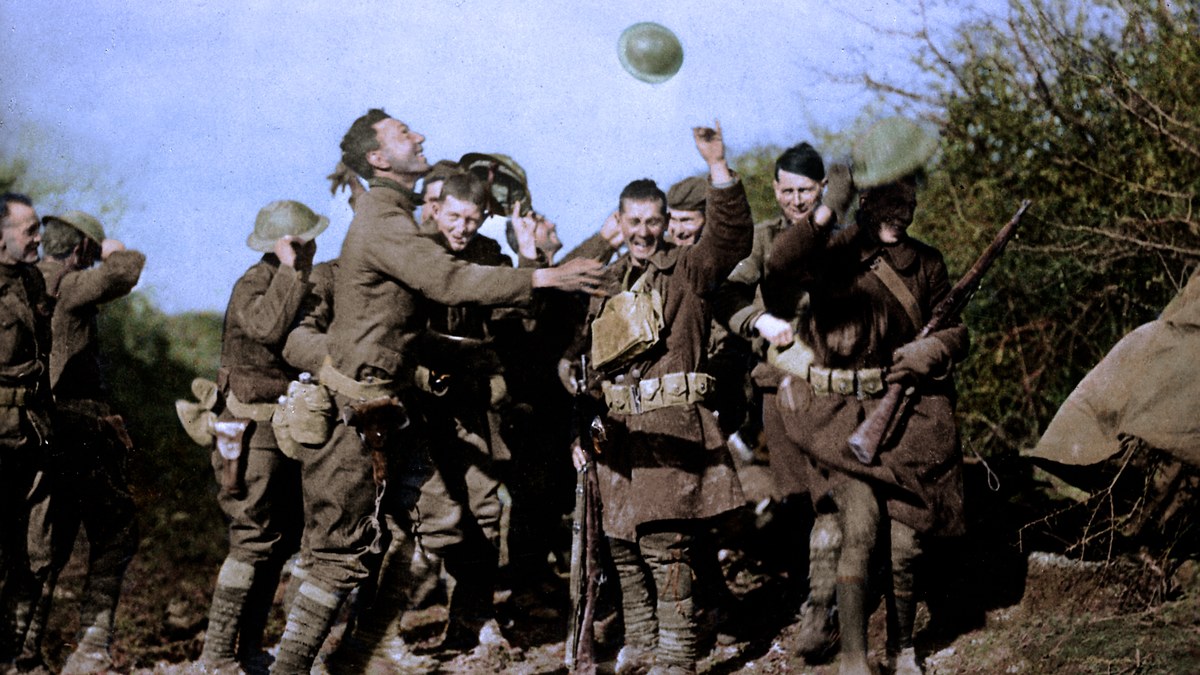
Why Veterans Day Is on November 11
The date comes from one hour in 1918. The name came from a veteran in Birmingham, Alabama. And for a few years in the 1970s, the holiday wasn't in November at all.
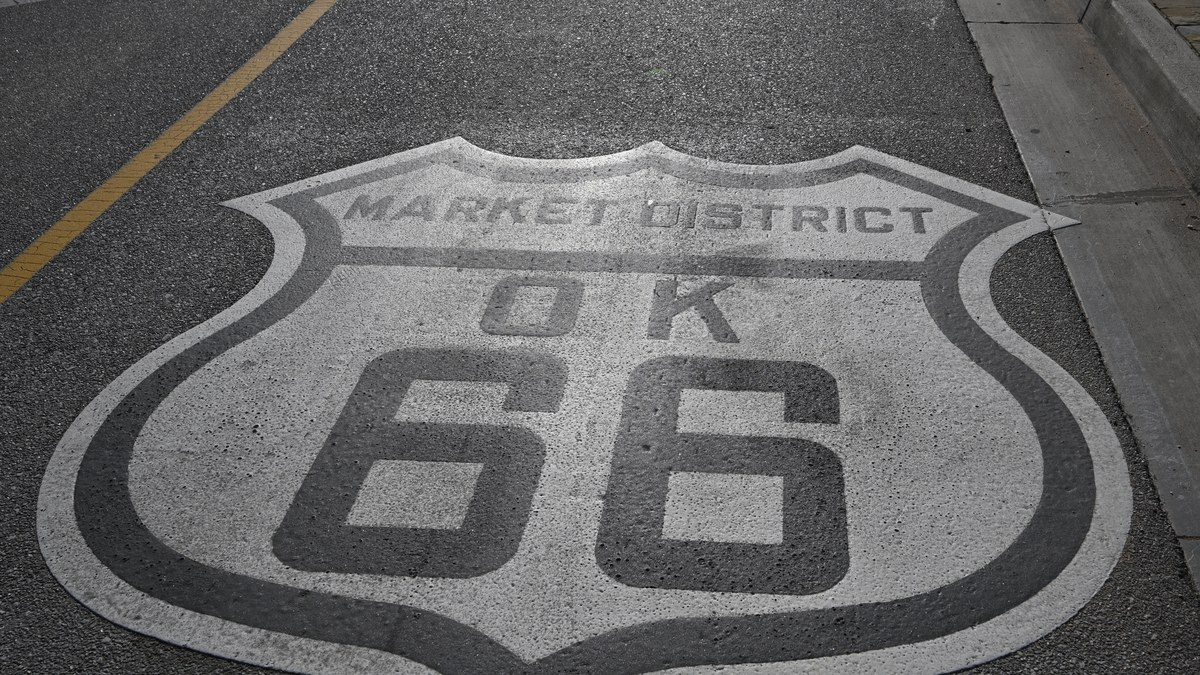
Route 66 Turns 100: How the Mother Road Began
Route 66 didn't open with a ribbon. It began with a vote in North Carolina, an argument over a number, and a road that was mostly unpaved.
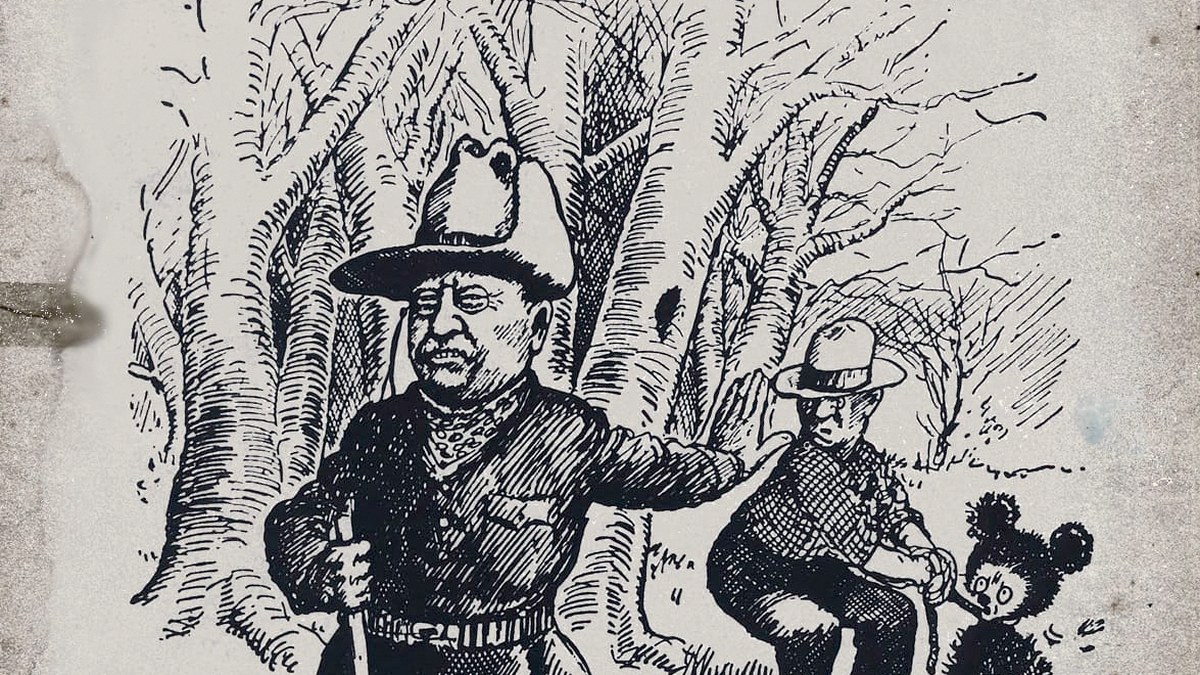
The Real Story of the Teddy Bear, 1902
The teddy bear began with a hunt in the Mississippi Delta, a guide named Holt Collier, and a bear that did not survive the story.