Every woodworker has had one: a chair rung that popped loose, a drawer corner that let go, a glue-up that looked fine until it didn't. Usually the glue isn't the real problem. It's the joint, the surface, or the shop. Here's how to pick the right glue and how to make it hold.
The five glues worth knowing
| Glue | Best for | Watch out for |
|---|---|---|
| PVA (white or yellow wood glue) | Most indoor furniture and projects | Water resistance varies; check the label for Type I or Type II |
| Polyurethane glue | Some damp-location and mixed-material jobs (check the label) | Foams as it cures; clamp well and trim the foam |
| Epoxy | Gaps, loose joints, repairs | Mix exactly; it costs more |
| Hide glue | Antique repair, joints you may want to take apart someday | Weaker against heat and moisture by design |
| CA (super glue) | Small, quick fixes and parts hard to clamp | Brittle; not for main furniture joints |
PVA glue. This is the everyday wood glue in most shops. Water resistance depends on the product: Type I is essentially waterproof and Type II is water resistant under the industry standard. Read the label, especially for anything that will get wet.
Polyurethane glue. The USDA Forest Products Laboratory (FPL) explains that one-part polyurethane glue reacts with moisture and releases carbon dioxide, so it foams. Clamp the joint snugly and trim the foam once it cures.
Epoxy. FPL says epoxies are preferred when you need gap filling and lower clamping pressure. It's the fix for a sloppy joint or a repair where the parts don't fit perfectly.
Hide glue. The old furniture maker's glue. Smithsonian conservation research describes hot hide glue as strong and easily reversible. That's why restorers like it: with heat and moisture, a joint can be taken apart years later without wrecking the wood.
CA glue. Super glue cures in seconds and is handy for small repairs, Woodsmith notes, but its bond is brittle and its working time is short. It's not a substitute for wood glue in a chair joint.
Six reasons glue joints fail
1. End grain. This is the big one. FPL says plain end-grain butt joints are practically impossible to make strong enough for normal use and may reach only about 25 percent of the wood's strength along the grain. Long grain glued to long grain, like an edge-joined tabletop, can be as strong as the wood itself. If a joint is end grain, add a mechanical joint: a dowel, a tenon, a biscuit, or a screw.
2. Old or dirty surfaces. FPL recommends gluing surfaces that were machined within 24 hours, and sooner is better. Surfaces should be flat, clean, and free of dust, oil, old glue, and crushed or burnished fibers. That's why re-gluing an old chair starts with cleaning the old glue and grime out of the joint.
3. The wrong moisture content. FPL gives 6 to 14 percent as a good range for many adhesives. Wood that is wetter or drier than the pieces around it keeps moving after the glue sets, and that movement can stress and break the joint.
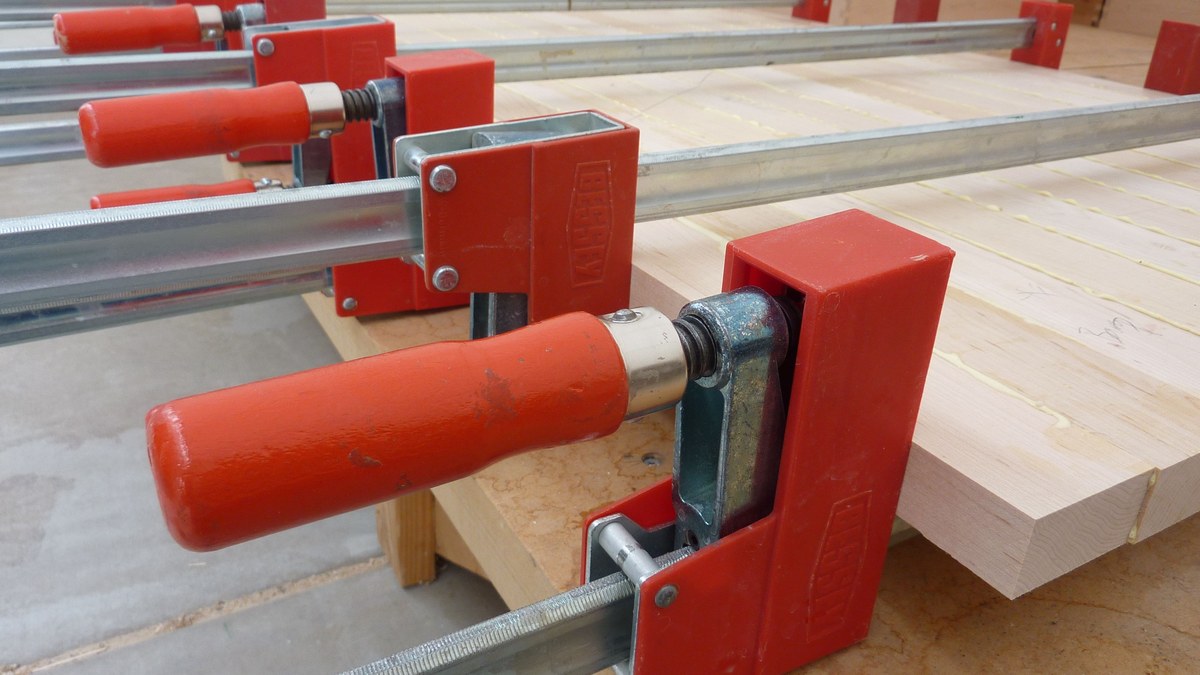
4. A starved joint. More clamp pressure isn't always better. FPL warns that too much pressure can squeeze out too much glue or drive it into the wood, leaving a weak, incomplete glue line. FPL puts typical pressures at about 100 psi for low-density woods up to 250 psi for the densest. In practice: tighten until you see a small, even bead of squeeze-out, then stop.
5. A cold shop. Many PVA glues have a minimum working temperature. One major maker's white glue, for example, says the glue, air, and wood should all be above 50°F. Check the label for yours, and don't glue up in an unheated garage on a January night. Freezing can also thicken or ruin the glue in the bottle, so bring it inside for winter.
6. Rushing the clamps. Every glue has an open time (how long you have to assemble), a clamp time, and a full cure time. One PVA data sheet lists 5 to 10 minutes open time, 20 to 30 minutes of clamp time, and 24 hours to full cure. Other glues differ, so follow your label, and don't stress the joint the same day.
A quick checklist for a strong joint
- Long grain to long grain whenever you can
- Fresh, clean, flat surfaces
- Wood at room moisture, acclimated to the shop
- A thin, even coat on both surfaces for wide joints
- Clamp until a small bead squeezes out, not until it gushes
- Warm shop, fresh glue, full cure before stress
Grandpa may have kept a glue pot warm on the stove, because hide glue was what furniture makers used for generations. Today's bottles are easier, but the rules haven't changed: good joints, clean wood, and patience. The glue just holds what the joint already did right.