For a while neither of them said anything.
The barn smelled like it always had, of old leather and mouse droppings and the creosote on the posts. Caleb didn't come any closer. He stood with his back against the door and his hands hanging open at his sides.
Ramon set the iron back down on the feed sack, gently, as if it might go off.
"You shut that door so I couldn't leave," Ramon said, "or so you couldn't?"
Caleb laughed, and it came out wrong. "I don't know."
Ramon pulled Bud's old stool out from under the bench and sat on it. His knees thanked him. He took off his hat and set it on the bench beside the iron.
"Tell me," he said.
It came out the way those things usually do. Not all at once. In pieces, with long silences between, while the cattle moved in the trap behind the barn.
The drought had burned up the summer grass. Caleb had sold half the herd in June to keep from feeding hay he couldn't afford.
The note at the bank came due in December. His grandmother was in a care home in Las Vegas, New Mexico, and the bills came every month whether it rained or not.
"Then the hail came through in August," Caleb said. "Took Tomas's fence down. Eleven of his cows walked straight onto my place like they were looking for me."
"And you kept them."
"I meant to call him. I swear I did. I put them in the trap. And then I got the letter from the bank, and I was standing out there looking at them, and I thought about Granddad saying the only thing between his cows and Tomas's was one little bar."
He looked at the bench.
"I had a blacksmith in Raton make that iron. Told him it was for touching up blotched brands. I did the first one in September. Then I couldn't stop, because once you've done one, you've already done it."
"You sold one today."
"To see if it'd pass." Caleb's voice went thin. "It passed the papers. It didn't pass you."
Ramon thought about the steer in pen fourteen. The wide soft J and the sharp new bar. A mark that grew up with an animal, and a mark that didn't.
He looked at the young man against the door. He'd known Caleb since diapers. The boy had grown up decent, the way his grandfather had raised him.
That part was spread wide and deep, all the way through him. What he'd done since August was new, and narrow, and sharp at the edges.
It was there. It was real. But it wasn't the whole animal.
"Your granddad and I branded calves together for forty-nine years," Ramon said. "You know what he told me once? He said a brand is just a man signing his name on something so everybody knows it's his."
Caleb shut his eyes.
"You signed your name to something that isn't yours," Ramon said. "Now you've got to sign it to something that is."
They drove to the Lujan place in Ramon's truck. Caleb didn't ask where they were going. He knew.
Tomas Lujan was seventy-four and still ran two hundred cows. He came to the door in his sock feet with a TV going behind him, and he looked at Ramon, and then at Caleb, and then back at Ramon.
"It's late," he said.
"Caleb has something to tell you," Ramon said. "I'd ask you to let him finish before you say anything."
Tomas let them into the kitchen. He didn't offer coffee.
Caleb told it all, standing up, in the same flat voice. The fence. The trap.
The iron. The bank.
The one steer at the sale. When he was done, Tomas sat looking at the table for a long time.
"I carried your grandfather's coffin," Tomas said finally.
"I know, sir."
"He'd have skinned you."
"Yes, sir."
Tomas looked at Ramon. "Did you call Eli?"
"Not yet. I thought Caleb should be the one."
Caleb took out his phone. His hand shook so badly the first time that he had to start over.
Ramon didn't help him. He sat at Tomas Lujan's kitchen table and listened to the young man tell the sheriff where he was and what he'd done.
The court would decide the charges. Ramon had been in law enforcement too long to pretend otherwise, and he didn't make Caleb any promises.
But in the morning, Maria Baca drove out to the Wynn place with her clippers and inspected all ten head in the trap. Every one of them had the same wide, soft lazy J that had grown up with the animal, and the same thin, sharp bar that hadn't.
"Ten for ten," she told Ramon. "You read it right."
"I've been reading Bud's brand for fifty years," he said. "I'd know it in the dark."
Tomas Lujan told the district attorney he wanted his cattle back and his fence paid for and the boy put to work. He said he'd rather have a neighbor who owed him than a neighbor in prison. Eli wrote it all down and said he'd pass it along.
Caleb spent the rest of that week rebuilding the Lujan north fence, every rod of it, with Tomas's wire and his own two hands. Ramon came out each afternoon to stretch wire with him, because a fence goes up faster with two men, and because Bud would have come.
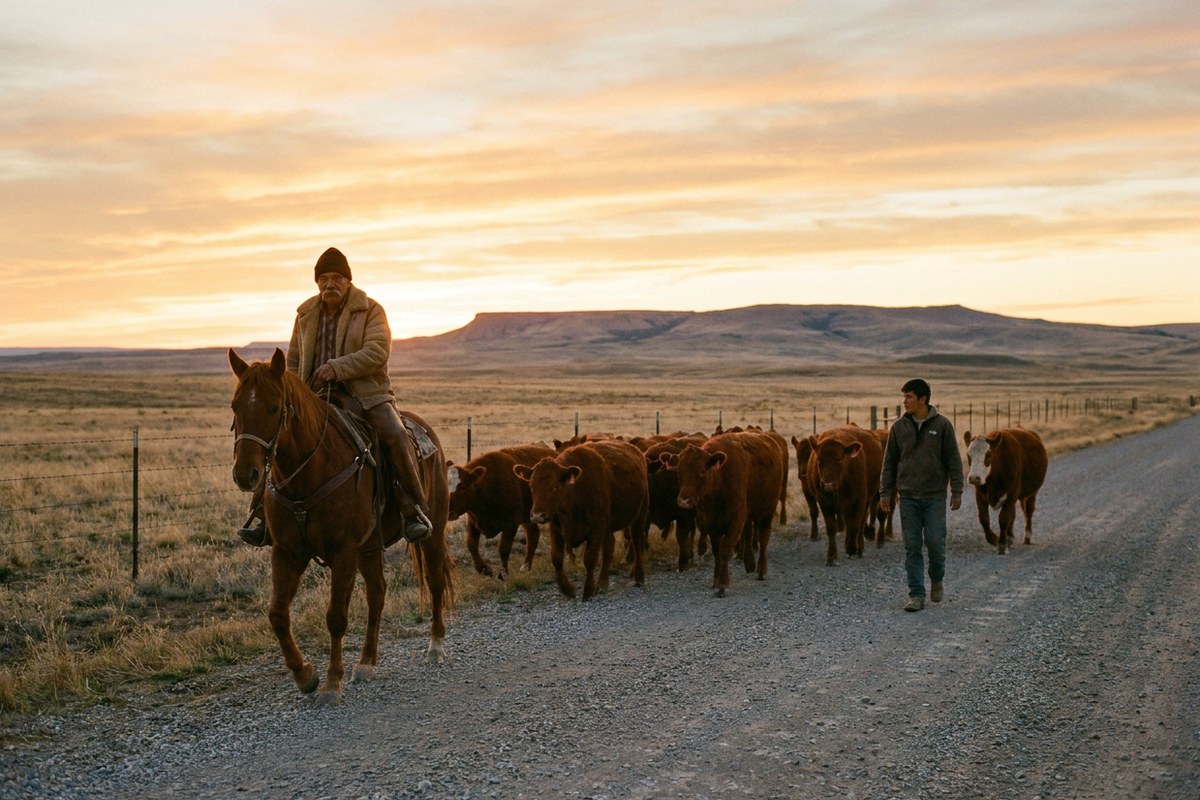
On Saturday morning, they pushed the ten cows down the county road toward home.
The cows knew the way. Ramon rode drag on his old bay gelding with Caleb walking beside him, and he let the cattle lead.