Part 1
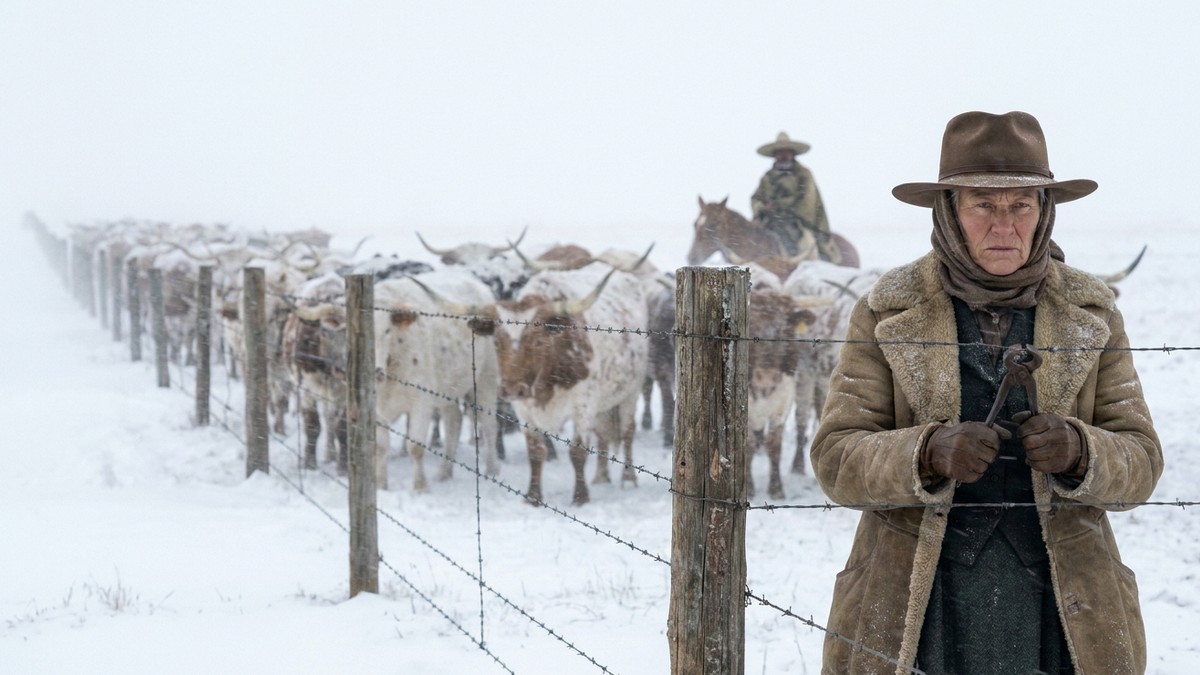
On the last night of 1885, in a blizzard, Cora Bledsoe took her late husband's pliers and went out to cut her own new wire.
It was the Texas Panhandle, the high, flat, treeless plains north of the Canadian River, where the wind came down out of Kansas with nothing to stop it. Cora was sixty-two. She had a small ranch on Blue Creek, four sections of grass and four hundred cows, a two-room rock house, and one hired man, old Tomás Garza, who had been a vaquero for forty-five years and had come up the trail with her and Sam in 1879.
Sam had been dead two years. Cora had run the place alone since. She had fenced her south line that summer with new barbed wire, four strands, on cedar posts, bought on credit. It had cost her nearly everything she had.
And now she was going to cut it.
It had started in the spring, with the big outfit to the south.
The Glenisla Land and Cattle Company was owned by a syndicate of bankers in Edinburgh and ran sixty thousand cattle on a range the size of a county. Its manager was a young Scot named Mr. Robert Ainslie, very correct, very clever, with a gold watch and a bowler hat, who had never spent a winter on the plains.
"The Glenisla is building a drift fence, Mrs. Bledsoe," he told her in April, in her own kitchen. "Across the whole north line of our range. Thirty-five miles of it. When the northers blow, the cattle from up in Kansas and the Strip drift down ahead of the wind and eat our winter grass. The fence will stop them."
"Stop them where?" said Cora.
"At the fence, ma'am." He spread a map on her table. "Your south line runs along ours for three miles. If you'll fence it, we'll tie our wire into yours, and that closes the gap."
Cora looked at the map. Then she looked at Tomás, who was sitting by the stove mending a bridle and saying nothing.
"Cattle that drift in a norther, Mr. Ainslie," she said, "don't stop because there's a fence. They stop because they can't go on. And then they stand there with their tails to the wind until they freeze."
Ainslie smiled politely. "With respect, Mrs. Bledsoe, the company has studied the question. I answer to a board in Edinburgh. They count every blade of grass on this range, and every cow that eats it. If I let the drift come in and eat our winter feed, they will want to know why, and they will be right to ask."
She fenced her line that summer, because the Glenisla's lawyers in Tascosa made it plain what would happen if she did not. Three miles of new wire. And the Glenisla tied its thirty-five miles into both ends of it.
The winter of '80 and '81, Cora remembered.
That was the first winter she and Sam had spent on Blue Creek. The northers had come one after another, and the cattle from the north had drifted down by the thousands ahead of the wind. And the ones that lived, Tomás had shown her in the spring, were the ones that kept going. Clear down to the Canadian River breaks, the deep canyons along the river, out of the wind, with water, and brush, and grass in the bottoms. The cattle that reached the breaks lived. The ones that stopped on the flat plains died.
"The cattle know," Tomás had told her that spring, in Spanish, riding along the rim of the breaks. "Better than men. In a storm, they go where the shelter is. If you don't stop them, most of them will find it."
The blizzard began on the thirtieth of December.
It came out of the north in the afternoon, a black wall of cloud, and by dark the snow was blowing so hard that Cora could not see the barn from the kitchen window. The thermometer on the porch went down past zero, and kept going. The wind screamed around the rock house all night and all the next day.
On the second afternoon, Tomás came in from the south pasture with ice in his mustache and his face gray.
"Señora," he said. "Come and see."
They rode out together in the storm, bent low over their horses' necks, along her south fence.
The cattle were there.
Hundreds of them. Then thousands, as far along the fence as Cora could see in the blowing snow. Cattle from Kansas, from the Strip, from every outfit to the north, all of them drifted down before the wind and stopped dead at her new wire. Pressed against it. Packed against it, ten deep, twenty deep, with their heads down and their backs white with snow, bawling, the ones behind pushing the ones in front against the barbs.
They could not go on. They would not turn back into the wind.
They would stand there until they died.
Cora sat her horse in the howling white and looked at it. She thought about the credit at the bank. She thought about the Glenisla's lawyers in Tascosa.
Then she reached into her coat and took out Sam's old fence pliers.
"Señora," said Tomás quietly. "Mr. Ainslie will sue you. He will take the ranch."
"Probably," said Cora Bledsoe.
She got down off her horse in the snow, and walked to the nearest post, and put the jaws of the pliers around the top strand of her own new wire.