Part 2
Anders was already at the door in his nightshirt, with the lantern.
"Into the cellar," he shouted. "Mormor. Signe. Now."
The cellar was a hole under the floor, with a trapdoor. Signe got Mormor down the ladder. But she did not go down herself. She stood at the window with her hands on the sill, watching the lightning, watching the river of cattle come.
And then, in the next flash, she saw the riders.
Three of them, black against the rain, racing along the front of the herd on the near side, between the cattle and the wheat. Low over their horses' necks. Riding flat out across the dark prairie, where one prairie-dog hole could break a horse's leg and a man's neck.
The one in front was on a buckskin.
She had heard the cowboys talk about it in town, in English she could not follow, with their hands. Now she saw it.
You could not stop a stampede. Nobody could stand in front of two thousand head of running cattle and live. But you could turn it. If you could get to the leaders at the front, and crowd them, and turn them a little, and then a little more, the rest would follow. You could bend the whole herd around, slowly, into a great circle, until they were running around and around in a ring and had nowhere to go, and slowed, and stopped.
Milling, they called it.
The buckskin reached the leaders. Signe saw the rider swing his hat at their faces, saw the lead steers swerve. The herd bent. A quarter mile from the wheat, then a few hundred yards, the black river curved away to the south, away from the Lind claim, away from the house, and began to turn back on itself.
Around. And around.
The thunder rolled off east. The rain eased. And in the silences between the thunder, slowly, the rumbling of the hooves began to fade.
Then she heard him singing.
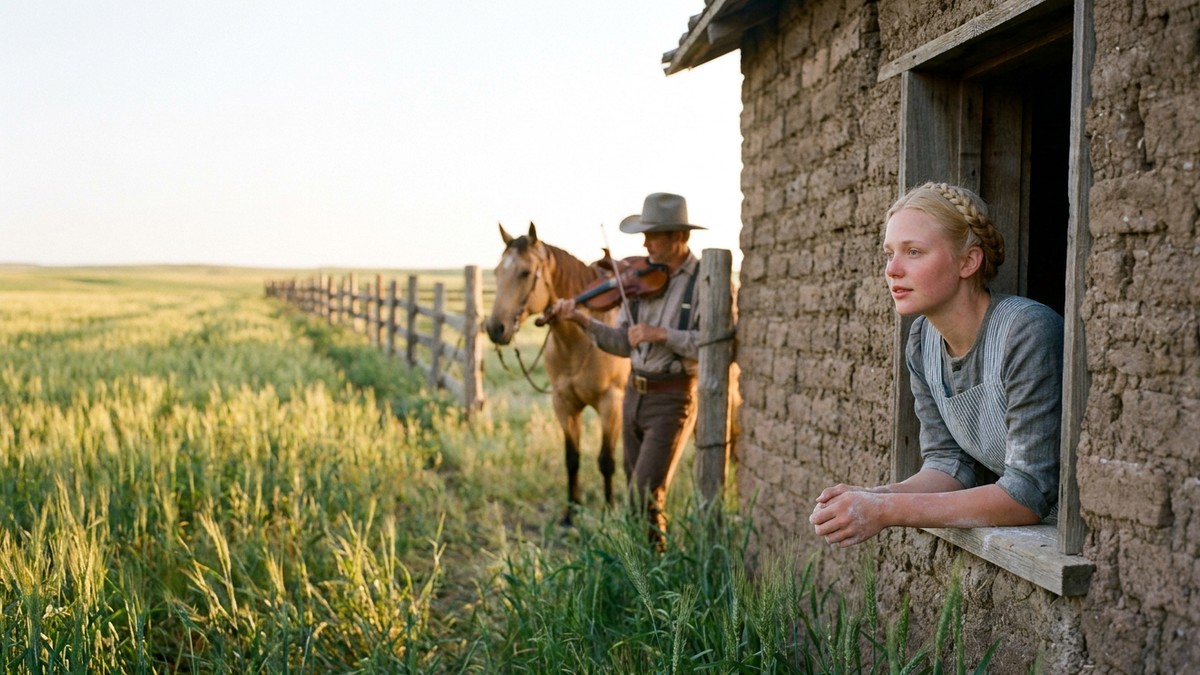
It was a thing the cowboys did on night guard, to calm the cattle. Any song at all, they said, so long as it was slow and steady and the cattle knew there was a man there. Signe pushed the window open and leaned out into the wet dark and heard it, coming across the prairie from the edge of the milling herd.
One man's voice, a little hoarse, a little out of tune.
Singing "Vårvindar friska."
Not the words. He did not know the words. He was singing it on "la," and on "hm," and on nothing at all. But it was the tune, every note of it, slow and loud and a little out of tune, exactly as Mormor had hummed it on the bench every single evening in May.
Signe stood at the window in her nightgown and put both hands over her mouth.
Behind her, the trapdoor creaked. Mormor Brita climbed up the ladder and stood in the dark room beside her and listened too.
"Well," said Mormor, in Swedish, sounding very pleased. "He learned it."
Signe turned and stared at her. "You taught it to him. On purpose."
"Somebody had to," said Mormor. "You two had no words. A man needs something to sing at a girl's window."
In the morning, the Lind wheat stood green and whole in the sun. Not one row was trampled.
The herd grazed peacefully two miles south, as if nothing had happened. And at nine o'clock, a buckskin horse came up the fence line, walking slowly, very lame in the off foreleg, with a tired young man walking beside it, leading it by the reins.
Anders Lind went down to the fence.
Signe watched from the door, with her heart in her throat. Her father stood at the cottonwood post with his arms folded and looked Wes over. At his wet clothes, his muddy boots, his lame horse. At the green wheat behind him, standing whole.
Then Mormor Brita walked down the path past Signe, slow and stiff, with her cane, and stopped beside her son.
She spoke to him quietly, in Swedish. Signe could not hear all of it. But she heard her grandmother say, "Your own father was a Finn, Anders. When I married him he could not say good morning to me in Swedish. Do you remember what he did instead?"
Anders did not answer.
"He sang," said Mormor. "Every night. Forty years. Badly."
Then she turned to Wes, and looked up at him, and pointed at the house, at the table she could see through the open door, and counted off three days on her fingers. Midsummer. And she pointed at the flour sack tied behind his saddle, where the fiddle was.
Wes looked at her. Then at Anders.
Anders Lind unfolded his arms. He did not say anything. But he reached out, slowly, and took the reins of the lame buckskin out of the young man's hand, and led it up toward his own barn.
On Midsummer Eve, they raised a pole in the yard, wound with green leaves and the wild roses that grew along the creek. Six Swedish families came from all around, in wagons, with baskets of food and children. And Wes Tillery came, washed and combed, in a clean shirt, with the fiddle.
He played until midnight, while the light lingered long in the sky. Polskas and waltzes and reels. And at the end, without being asked, "Vårvindar friska," while all the Swedes sang the words, and Mormor sang them loudest of all, out of tune.
When it was over, Signe came and stood beside him by the pole, in the long blue light.
"Wes," she said. She had been practicing it.
He looked down at her and smiled.
"Signe," he said. He had been practicing too. This time he said it exactly right.