Part 1
Signe Lind spoke no English, and the cowboy at her fence spoke no Swedish, and that was the whole trouble.
It was May 1887, in Phelps County, Nebraska, where the Swedes had come by the hundreds to break the prairie into wheat. Signe was nineteen. She had come over from Småland two years before with her father, Anders, and her grandmother, Mormor Brita, who was seventy-four and had buried a husband and five children and crossed an ocean, and was afraid of nothing on God's earth except snakes.
They had a sod house, a well, a team of oxen, and eighty acres of wheat coming up green.
And every evening, at sundown, a young man on a buckskin horse rode the line along the south edge of their claim.
He rode for one of the cattle outfits that still ran herds on the open grass down toward the Platte. Anders Lind hated every one of them. Last September a herd had broken through and trampled six acres of his oats flat in an afternoon, and the foreman had laughed and ridden off and paid nothing.
"Cowboys," Anders said at supper, in Swedish. "Cattle and cowboys. They think the whole prairie is theirs."
Signe said nothing. She was thinking about the buckskin horse.
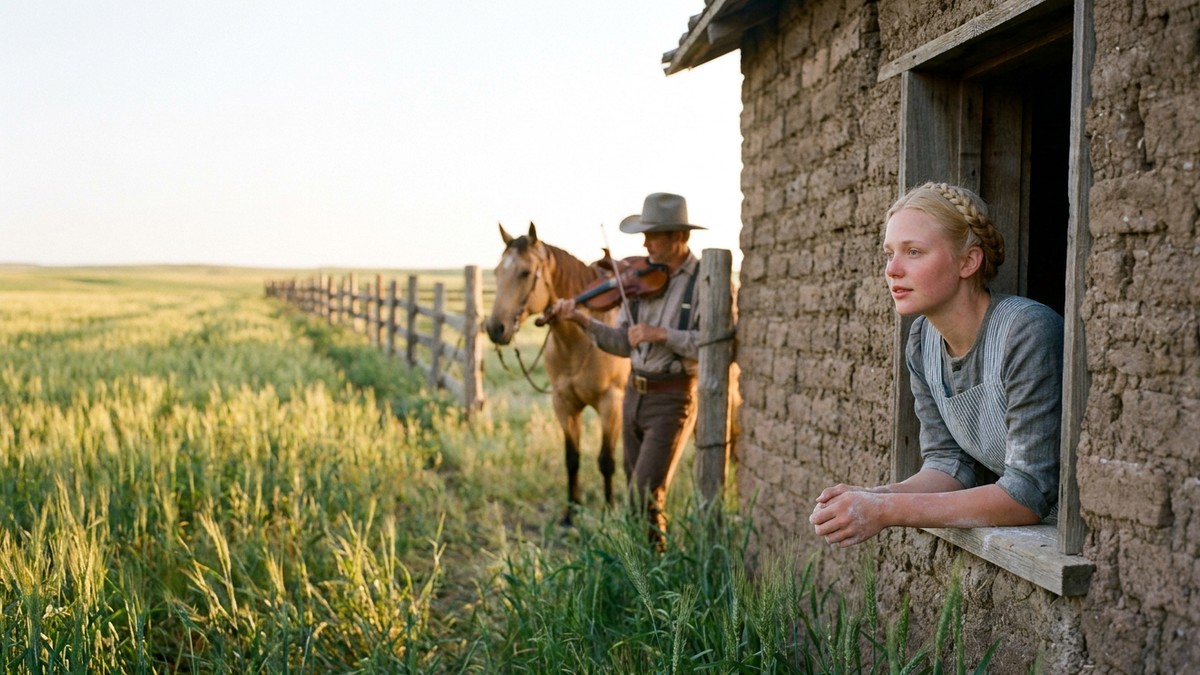
The young man was tall and loose in the saddle, with a sunburned face and pale hair under a wide gray hat. And tied behind his saddle, in a flour sack, there was a fiddle.
She knew it was a fiddle because one evening in early May, when he thought nobody was near, he stopped his horse at the corner of their fence, by the big cottonwood post, and took it out and played.
She heard it through the open window of the sod house while she was kneading bread.
It was a tune she did not know. Something quick and lonesome at the same time, that went up and came down again like a bird. She stood with her hands in the dough and listened until he stopped. Then she went to the door.
He saw her and took off his hat.
She did not know what to say. She had no words he could understand. So she went back inside and took a cardamom bun out of the crock, still warm, wrapped it in a clean cloth, and walked down to the fence and set it on top of the cottonwood post.
Then she walked back to the house without looking around.
When she looked out the window, he was eating it. He ate the whole thing. Then he folded the cloth very carefully, and laid it back on top of the post, and played another tune.
That was how they talked, all through May.
He played. She baked. Every evening he stopped at the cottonwood post, and every evening there was something waiting on it, wrapped in a white cloth. Cardamom buns. A slice of rye bread with butter. Once, a little cake with lingonberries from the last jar Mormor had brought from Sweden.
And every evening he played a tune for it. A different one each time. Jigs and reels and waltzes, and once something so slow and sad that Signe stopped sweeping the floor and stood with the broom in her hands until it was over.
They learned a few words. He pointed at the fiddle and said, "Fiddle." She pointed at the bun and said, "Bulle." He tried it. It came out wrong, and she laughed, and he laughed, and that was the first time she heard him laugh.
His name was Wes. He pointed at himself and said it. She pointed at herself.
"Signe," she said.
He tried that too. "Sig-nee." Wrong again. She did not correct him.
Mormor Brita watched all of it from the bench by the door.
She did not say anything to Anders. She did not say anything to Signe. But Signe noticed that in the evenings now, when the buckskin horse came along the fence line, her grandmother was always sitting out on the bench in the sun, shelling peas or mending, and humming.
Always the same song. An old Swedish song, about fresh spring winds and a sweetheart far away. "Vårvindar friska." Mormor hummed it over and over, loud and slow and a little out of tune, every evening, until Signe was sick of it.
She did not think to wonder why.
At the end of May, Anders found out.
He came in early from the field and saw the white cloth on the fence post and the cowboy with the fiddle, and his face went dark red. He walked down to the fence with the hayfork still in his hand.
He shouted at Wes in Swedish. Wes did not understand a word of it. He did not need to. He put the fiddle away and touched his hat and rode off.
Anders came back up to the house and threw the white cloth on the table.
"No more," he said to Signe. "Not one more crumb. That man rides for the cattle. The same cattle that ate my oats. You will not feed him, and you will not look at him, and you will not go near that fence again."
Signe did not argue. She did not look at Mormor. She went to bed and lay awake and listened, and that evening, and the next, and the next, the buckskin horse did not come.
On the night of the twentieth of June, three days before Midsummer Eve, the storm came.
It came out of the west after midnight, huge and black, with lightning walking across the prairie on long white legs. The thunder shook the sod walls. Signe woke and sat up in the dark.
Under the thunder, there was another sound. A low, rolling, rumbling sound, coming up out of the ground itself, through the floor, through the frame of her bed, getting louder.
She knew what it was. Everyone on the plains knew what it was.
She went to the window. The lightning flashed, and she saw them, a black river of cattle pouring across the prairie in the rain, two thousand head, with their horns tossing, running blind with terror.
Straight toward the wheat. Straight toward the house.