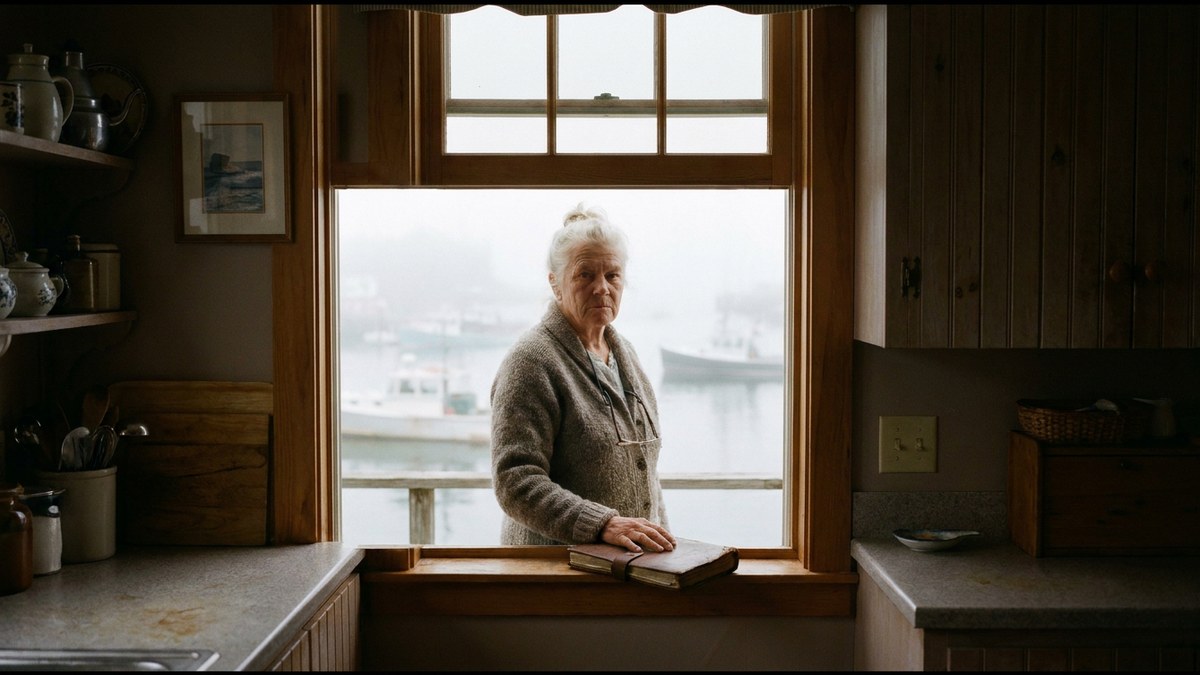
The radio said the Coast Guard was searching east of Ledge Island, and Agnes Pelletier said, out loud to her empty kitchen, "He's not east."
She was seventy-five. She was standing at the window of her house above the harbor in Port Anson, Maine, with the scanner on the counter turned up as loud as it would go. Outside, the fog was so thick she couldn't see the end of her own wharf.
It was the last Tuesday in February. It was four in the afternoon. And Owen Beal had been missing for two hours.
Owen was twenty-six. He fished lobster out of Port Anson on a thirty-eight-foot boat called the Mary Beth, named for his grandmother, who had been Agnes's best friend for sixty years.
He'd gone out that morning alone, to haul his offshore traps before the weather turned. At 1:52 in the afternoon, he'd called the harbor on the radio. His engine had quit.
He was drifting. He was taking on some water. He could hear surf.
Then the radio had gone quiet.
The harbormaster had called the Coast Guard. The Coast Guard had launched a forty-seven-foot motor lifeboat from the station up the coast and sent a helicopter that couldn't fly because of the fog. They'd put Owen's last position into their computer, with the wind and the time, and the computer had drawn them a box on the chart.
The box was east of Ledge Island. That was where the wind would push a boat with a dead engine.
Agnes knew that it wasn't where the water would take it.
Agnes had grown up on Ledge Island.
Her father, Lucien Pelletier, had been the keeper of Ledge Point Light from 1946 until the Coast Guard automated it in 1971. She'd been born in the keeper's house and had lived there until she was twenty-one. She'd learned to row before she learned to read, and she'd spent her whole childhood watching the water around that island do things it wasn't supposed to do.
Her father kept a log. Every day for twenty-five years, he wrote down the weather, the wind, the tide, the ships, and anything else he thought a keeper ought to know.
When he died, the logs had come to Agnes. Twenty-five leather-bound books, on the bottom shelf of her bookcase.
She'd read them all. Some of them twice.
She went to the bookcase now and pulled out the one from 1958, the year she was seven, because she remembered exactly what was in it.
The Christensen boy. His boat had lost its engine off the island in a fog in March of 1958, and the searchers had looked east, with the wind, for six hours. Her father had found him in the end.
She found the page. Her father's square, steady hand.
March 11. Fog, wind NE 15. Christensen boy adrift.
Searched E. Found him 1900 hrs on the Sisters, SW of Ledge, alive. Note for the next keeper.
On the first of the ebb, the tide sets hard SW through the Gut at two knots and more. It will carry a drifting boat against the wind.
Do not look where the wind says. Look where the water goes.
Agnes looked at the clock on the stove. Then at the tide chart taped to her refrigerator.
High water had been at 1:15. Owen's call had come at 1:52.
The first of the ebb.
She called the harbormaster first. Bill Haskell was sixty and had known her since he was a boy, and he listened, and then he sighed.
"Agnes," he said gently, "the Coast Guard has a computer that does all that. Wind, current, everything. They've got the best drift model in the world."
"Does their computer know about the Gut?"
"I'm sure it knows about the current."
"Bill, the Gut isn't on the chart. It's a channel between the ledges that only runs on the first two hours of the ebb. My father found the Christensen boy there in 1958, right where the wind said he wouldn't be."
"1958," Bill said.
"The water hasn't moved since 1958."
Bill was quiet. "I'll pass it on," he said. "That's all I can do, Agnes. They're the ones with the boat."
She hung up. She didn't know if he'd pass it on or not.
She stood at the window. The fog pressed against the glass like wet wool. Somewhere out there, past the end of her wharf and the harbor mouth and two miles of cold gray water, the Mary Beth was drifting toward the Sisters, three black ledges that broke the surface at half tide and drowned at high water.
The water in February was thirty-eight degrees. Agnes knew what that meant. Every fisherman in Port Anson knew.
She thought about Mary Beth Beal, Owen's grandmother, who had died last spring. They'd been girls together.
They'd rowed across the harbor together on summer nights to steal blueberries. Mary Beth had made her promise once, on a dock, when they were both very old, to keep an eye on that boy.
Agnes opened the window.
The cold came in, and the fog, and the sound of the harbor. Gulls.
The bell buoy at the harbor mouth, clanging slow. The far-off thump of the Coast Guard boat's engines, running east.
And then, under all of it, so faint she almost didn't hear it, something else.
Three short blasts on a boat horn. Then nothing. Then three more.
It came from the southwest.