Part 2
It was the hardest thing Clarissa Bower had ever done in her life.
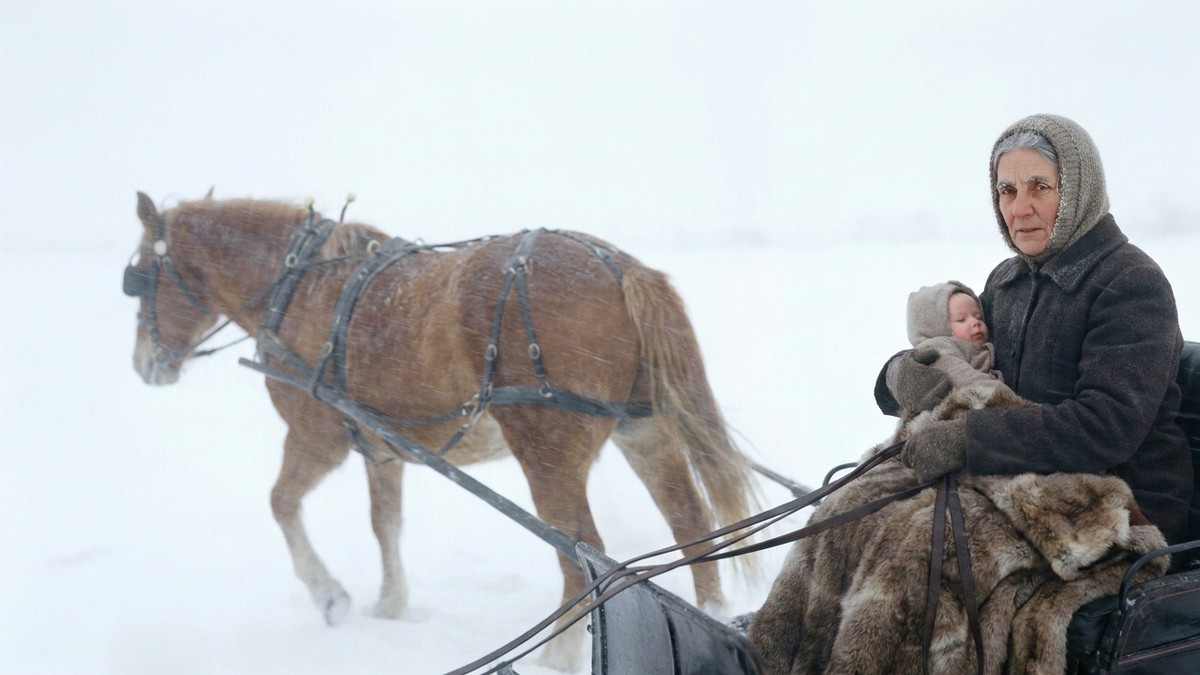
Every part of her wanted to grab the reins. To steer. To do something. She could not see the road, she could not see the fence, she could not see anything at all but white, and she was sitting in a buggy in a screaming blizzard with a sick baby inside her coat, and she was doing nothing.
She held the reins in her lap, slack, and held the baby, and let the old mare walk.
Dolly put her head down.
Clarissa felt it more than saw it, through the reins. The mare dropped her head low, almost to the ground, as horses do in a storm, and turned a little, and kept walking. Slowly. Steadily. Not fast. Not hesitating, either. One step and then the next, into the white.
Then, after a long while, Dolly turned left.
Clarissa's hands jerked on the reins before she could stop them. Left was wrong. Home was straight on, up the section road, north, then east at the corner. Left was the Kruger lane. The old cut across the Kruger pasture that they used to take to the Krugers' on Sundays, years ago, before the Krugers moved away.
Ezra's words came back to her. Last week she tried to turn into the Kruger lane. Wouldn't go straight for the reins at all.
Clarissa opened her hands. She let the reins go slack again.
"All right, Dolly," she whispered into the wind. "All right, old girl. You know best."
She never knew how long it took. An hour. Two. She lost all sense of time.
The cold was beyond anything she had ever felt. Her face went numb, and then her hands, and then her feet. Ice formed on her eyelashes and she could not open her eyes. She kept her arms locked around the bundle inside her coat and put her face down against it and felt for the baby's breath with her cheek. It was there. Rough and rattling and quick. But there.
Once the buggy lurched hard over something, a ditch or a drift, and nearly tipped. Dolly stopped. Then she leaned into the collar and pulled, and the buggy came up out of it, and she walked on.
Once, Clarissa heard something through the roar, close by on her right. A creak. A groaning, like a tree in the wind.
The cottonwoods. The windbreak. Their own windbreak, along the west side of the yard.
Dolly walked along it, close, so close that Clarissa felt a branch brush her shoulder. Then she turned once more, and stopped.
Clarissa forced her frozen eyes open. In front of her, so close she could have touched it, there was a wall of gray boards in the white. A door.
The barn door.
She got the baby into the house first.
Mary was up, half out of her mind with fever and terror, at the window with a lamp. Clarissa put Jenny in her arms and got the kettle going and the sheet tented over the cradle, as Dr. Pell had shown her, before she even took off her coat. The baby coughed, and gasped, and coughed. Then, slowly, in the warm steam, she began to breathe easier.
Then Clarissa went back out into the storm, holding the clothesline that ran from the house to the barn, and got Dolly unhitched and into her stall, and rubbed the ice off her with a sack, and threw down hay.
When she came back to the house, Mary said, "Where's Papa?"
Ezra had come home at three o'clock, Mary said, just before the storm. He had found Clarissa gone to town with the baby. When the storm hit, he had taken a lantern and a coil of rope and gone out to find her. He had gone south, down the section road toward Dorchester, the way she would come home.
The way she had not come home.
It was past six now. Pitch dark. Twenty below, or worse, and the wind still screaming.
Clarissa stood in the kitchen with her frozen hands in a pan of cold water, trying to think. She could not go out to look for him. Nobody could. Anyone who went more than ten feet from the house in that storm would never find it again.
Then she remembered the bell.
There was an old iron dinner bell on a post at the corner of the windbreak, by the road. Ezra had put it up years ago to call the children in from the fields. They had not rung it in a long time.
Clarissa wrapped her hands in rags, and tied a rope from the porch post to her own waist, and went out along the windbreak in the dark, feeling her way from tree to tree, until she found the post. And she rang the bell.
She rang it every few minutes all through that night. Back and forth from the house, on the rope. Ring, and ring, and ring. Her hands bled through the rags.
At a little after nine o'clock, through the howling of the wind, she heard a voice.
Ezra came stumbling along the line of cottonwoods out of the dark, half frozen, with no lantern, his face white with ice, following the trees and the sound of the bell.
He lost two toes to the frost. Clarissa lost the skin off both palms. The baby lived.
The next morning, when the storm had blown itself out and the whole world lay white and blinding under a hard blue sky, Ezra limped out to the barn before he did anything else.
Clarissa found him there an hour later, in Dolly's stall. He had given her a bucket of warm mash, and oats, and the best hay. He was brushing her down, very slowly, with his bandaged hands. The old mare stood with her eyes half shut and her floppy ear down, as she always did when she was content.
"The Hansen boy will be by Saturday," Ezra said, without turning around. "For the mare."
Clarissa waited.
"I'll tell him she's not for sale," said Ezra Bower. "Not for twenty dollars. Not for two hundred." He brushed the mare's neck. "She's not useless, Clarissa. She's old. There's a difference."
"Is there?" said Clarissa.
"I'm learning it," said Ezra.