Part 2
She walked up the gulch to the pest house that afternoon with a carpetbag in one hand and a basket in the other.
The townspeople watched her go from their doorways and their windows, with cloths tied over their mouths. Nobody spoke to her. A few of them stepped back inside as she passed, as if she were carrying the sickness up the hill instead of going to meet it.
The pest house was a long, low log cabin with a sod roof, in a clearing of aspens above the town. The smell reached her a hundred yards off. Inside, in the dim light from two small windows, there were twenty-three people on cots and straw ticks and blankets on the floor, burning, moaning, calling for water. It was hot and close inside. Flies buzzed at the windows.
Dr. Ruggles was asleep on his feet against the wall.
Thankful set down her bag. She rolled up her sleeves.
"Go home and sleep, Doctor," she said. "Six hours. I'll send for you if I need you."
She did not sleep much herself, those first days.
She opened the windows and propped the door to let the air through. She boiled water on the cabin stove and washed every face, every pair of hands. She changed the bedding and burned the old in a pit outside. She spooned broth and water into mouths too swollen to open. She laid wet cloths on burning foreheads. At night she sat by the worst of them with a candle and held their hands, the way nobody had held her mother's.
She remembered everything. Forty-two years, and she remembered every bit of it. Keep them cool. Keep them drinking. Keep the room clean. Keep their hands from the sores, so the scars won't be worse. Talk to them. Don't let them think they're alone.
And she talked. Hour after hour, in her quiet Vermont voice. About sewing. About the weather. About the mountains outside the window. Anything at all.
Lucy Starr was nine. She lay on a cot by the east window, with her fair hair matted and her face swelling under the red spots, too sick to cry.
On the third day, when the fever was at its worst, she opened her eyes and saw Thankful bending over her with a cloth.
The child's eyes went wide. Thankful knew that look. She had seen it on children's faces for forty-two years.
Then Lucy's hand moved, a little, on the blanket. Reaching.
"Are you the lady from church?" she whispered.
"I am."
"Mama said you had the smallpox when you were little."
"When I was nineteen."
Lucy studied her face. The pits and the hollows and the drooping eyelid.
"And you didn't die," she said.
"No," said Thankful. "I didn't die. And you're not going to either, if I have anything to say about it."
Every day at noon, Adeline Starr came up the gulch.
She stopped at the edge of the aspens, a hundred feet from the cabin, as the council had ordered. She stood there in the sun with a cloth over her mouth and her hands knotted together, staring at the east window, for an hour at a time.
Thankful saw her there on the first day. And on the second. On the third day, when Lucy's fever was worst, she saw Mrs. Starr sink down onto a stump at the edge of the clearing and put her face in her hands.
That evening, Thankful wrapped Lucy in a clean blanket and carried her to the east window, and held her up, so her mother could see her face from the trees.
Adeline Starr stood up. She raised one hand. She stood with it raised a long time.
The vaccine came from Denver on the tenth of June.
Dr. Ruggles vaccinated the whole town in three days, in the schoolhouse, every man, woman, and child who would bare an arm. This time nobody refused. After that, the new cases slowed, and then they stopped.
On the fourteenth of June, a woman walked up the gulch to the pest house and did not stop at the edge of the trees.
It was Adeline Starr. Her sleeve was rolled up to show the bandage on her arm, where the vaccine had taken. She had on an old calico dress Thankful had never seen her wear, and a big apron, and her handsome hair tied up in a kerchief.
She stopped in the doorway of the pest house and looked at Thankful.
"Dr. Ruggles says I'm safe now," she said. Her voice shook. "Or near enough. Tell me what to do."
Thankful handed her a basin.
"Water's on the stove," she said. "Start with the Kelly boy by the door. Wash his hands, and talk to him. He's frightened."
Of the thirty-one people who went up the gulch to the pest house that spring, twenty-six walked down again. Lucy Starr was one of them. She had a few small scars on her forehead and her chin, which her mother said were the most beautiful things she had ever seen.
On the first Sunday in July, the church in Silver Bell was full again for the first time in two months.
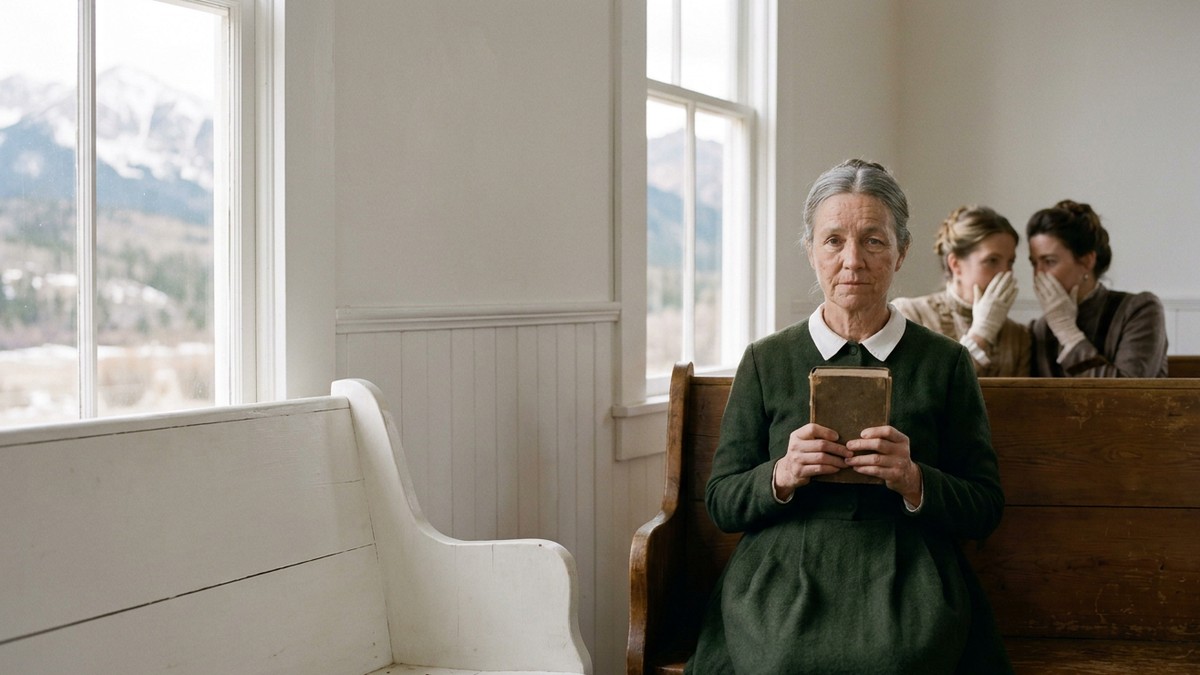
Thankful Gage came in late and sat in the fourth pew on the left, alone, as she always did, with the empty space beside her.
She was not alone long.
Adeline Starr came up the aisle in her best blue silk, with Lucy by the hand, past her own family's pew at the front, and stopped at the fourth pew on the left. Every head in the church turned.
Mrs. Starr sat down in the empty space beside Thankful Gage. Lucy climbed up on her other side and took Thankful's hand.
And they stayed there, all three of them, every Sunday after.