Franksgiving: The Year FDR Moved Thanksgiving
In 1939, President Roosevelt moved Thanksgiving up a week to help stores. The states split over which Thursday to keep. Here is how the holiday ended up on the fourth Thursday.
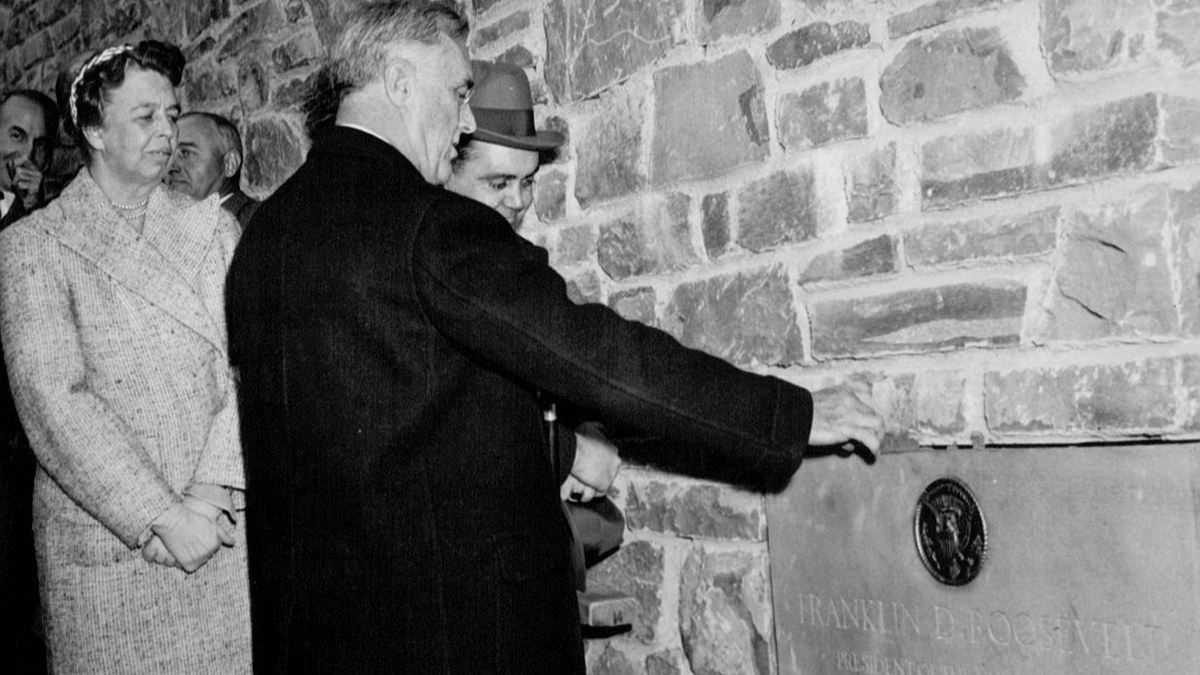
On August 14, 1939, President Franklin D. Roosevelt held an informal press conference on Campobello Island, New Brunswick. Partway through, he brought up Thanksgiving.
"I have been hearing from a great many people for the last six years," he told reporters, "complaints that Thanksgiving Day came too close to Christmas." That year, he said, "because Thanksgiving Day is the thirtieth of November (I had better check on that), I am going to step it up a whole week and make it not the last Thursday but the Thursday before the last Thursday in November."
It was his call for the federal government, not for the states. The result, by November, was two Thanksgivings, scrambled football schedules, out-of-date calendars, and a law that still decides which Thursday you will be eating turkey this week.
A tradition, not a law
For most of American history, Thanksgiving had no fixed legal date. In October 1863, Abraham Lincoln asked Americans to "set apart and observe the last Thursday of November next, as a day of thanksgiving and praise." Presidents after him kept proclaiming the last Thursday, year after year, but each one could have picked another day. The choice was his.
More American Memories
Explore Our "Remember When" Archive of Treasured Decades →In 1939, the calendar made that choice matter. November had five Thursdays, so the last one fell on November 30, leaving fewer than four weeks until Christmas.
The stores make their case
Roosevelt had faced the same calendar in 1933, his first year in office, and left the holiday alone. By 1939 the country was still climbing out of the Depression, and retailers were pushing.
According to the National Archives, Lew Hahn, general manager of the National Retail Dry Goods Association, sent a strong appeal to Harry Hopkins on August 4. Shoppers waited until after Thanksgiving to start buying for Christmas, the argument went, so a late Thanksgiving meant a short season. Hahn estimated that 12 to 15 percent of the year's retail trade happened between Thanksgiving and Christmas.
Ten days later came the announcement at Campobello. On October 31, Roosevelt made it official. "I, Franklin D. Roosevelt, President of the United States of America," the proclamation read, "do hereby designate Thursday, the twenty-third of November, 1939, as a day of general thanksgiving."
The year of two Thanksgivings
A President's proclamation covered federal employees and the District of Columbia. It did not bind the states, and every governor got to decide. They did not agree.
Even the official counts disagree. The National Archives says 32 states issued proclamations matching Roosevelt's and 16 refused. The Library of Congress counts it differently: 23 states observed November 23, 23 kept November 30, and Texas and Colorado declared both. Either way, a family in one state could sit down to dinner a full week before its cousins across the state line.
Football schedules were a mess. Games set for November 30 now landed after the new holiday, and the National Archives lists Fordham and NYU, Penn and Cornell, and Arkansas and Oklahoma among the schedules thrown off. Calendar makers protested that their 1940 calendars were already printed. Letters of protest reached the White House, and the Franklin D. Roosevelt Presidential Library preserves one of them. Later accounts call the whole affair "Franksgiving."
Roosevelt spent the new holiday at Warm Springs, Georgia, carving the turkey on November 23 while much of the country waited a week.
Trying again, then giving up
He did it again. In 1940 he proclaimed November 21. In 1941 he proclaimed November 20. In both years, that was the third Thursday of the month.
At a press conference on May 20, 1941, Roosevelt said the experiment "did not work," citing data from the Commerce Department and the Conference of Mayors showing that most stores saw little difference.
Congress picks a Thursday
Congress decided to take the question out of the President's hands. On October 6, 1941, the House passed a joint resolution making the last Thursday of November a legal holiday. Representative Michener told the House, "There appears to be no act of Congress that has ever designated a particular day as Thanksgiving Day."
The Senate saw the problem. "Last Thursday" would bring back the same fight every time November had five Thursdays. On December 9, the Senate changed the wording to the fourth Thursday. The House agreed, and Roosevelt signed it on December 26, 1941.
The law says, in part, "That the fourth Thursday of November in each year after the year 1941 be known as Thanksgiving Day, and is hereby made a legal public holiday." The first Thanksgiving under it fell on November 26, 1942.
Here is the odd part. In 1939, the date that started the uproar, November 23, was the fourth Thursday of the month. Under the rule Congress settled on, Roosevelt's first Thanksgiving would have been the official one.
- This year, November has four Thursdays, so the fourth and the last are the same day: Thursday, November 26. No one has to choose.
-
🏛️
"Congress Establishes Thanksgiving," National Archives, with the 1941 House resolution and Senate amendment: archives.gov ↗
-
🏛️
"The Year of Two Thanksgivings," Franklin D. Roosevelt Presidential Library: fdr.blogs.archives.gov ↗
-
🏛️
The 1941 law as printed in the Statutes at Large: govinfo.gov ↗
Join the Conversation
"Did your family ever have a Thanksgiving tradition that started by accident?"
DailyVibeX American History Community
- National Archives, Prologue, "Thanksgiving: Another FDR Experiment": https://www.archives.gov/publications/prologue/fdr-thanksgiving-experiment ↗
- National Archives, "Congress Establishes Thanksgiving": https://www.archives.gov/legislative/features/thanksgiving ↗
- National Archives, "Thanksgiving as a Federal Holiday": https://prologue.blogs.archives.gov/2023/11/20/thanksgiving-as-a-federal-holiday/ ↗
- National Archives Catalog, Lincoln's Proclamation 106 (1863): https://catalog.archives.gov/id/299960 ↗
- National Archives Catalog, FDR at Warm Springs, Nov. 23, 1939 (NAI 6728549): https://catalog.archives.gov/id/6728549 ↗
- Franklin D. Roosevelt Presidential Library, day log, August 14, 1939: http://www.fdrlibrary.marist.edu/daybyday/daylog/august-14th-1939/ ↗
- Franklin D. Roosevelt Presidential Library, press conference transcripts collection: http://www.fdrlibrary.marist.edu/archives/collections/franklin/?id=508&p=collections/findingaid ↗
- Franklin D. Roosevelt Presidential Library, Document of the Month, Thanksgiving: https://www.fdrlibrary.org/document-november ↗
- Franklin D. Roosevelt Presidential Library, "The Year of Two Thanksgivings": https://fdr.blogs.archives.gov/2022/11/14/the-year-of-two-thanksgivings/ ↗
- Library of Congress, Today in History, November 26: https://www.loc.gov/item/today-in-history/november-26/ ↗
- Library of Congress, Thanksgiving primary-source set: https://www.loc.gov/classroom-materials/thanksgiving/ ↗
- Library of Congress, Law Library, "Federal Holidays": https://blogs.loc.gov/law/2012/12/federal-holidays/ ↗
- American Presidency Project, Proclamation 2373 (1939): https://www.presidency.ucsb.edu/documents/proclamation-2373-thanksgiving-day ↗
- American Presidency Project, Proclamation 2441 (1940): https://www.presidency.ucsb.edu/documents/proclamation-2441-thanksgiving-day-1940 ↗
- American Presidency Project, Proclamation 2522 (1941): https://www.presidency.ucsb.edu/documents/proclamation-2522-thanksgiving-day-1941 ↗
- U.S. House of Representatives, Office of the Historian, Thanksgiving Holiday Bill: https://history.house.gov/HouseRecord/Detail/15032436198 ↗
- GovInfo, Thanksgiving feature (Congressional Record excerpts): https://www.govinfo.gov/features/thanksgiving ↗
- GovInfo, 55 Stat. 862 (Public Law 77-379): https://www.govinfo.gov/link/statute/55/862 ↗
- The New Yorker, "Amazing" (September 2, 1939): https://www.newyorker.com/magazine/1939/09/02/amazing ↗
Sponsored Historical & Heritage Features
Step Into Pine Hollow: 20 Complete American Stories
Warm, character-rich tales of small-town resilience, family heirlooms, and neighborly kindness.
Explore All 20 Stories →More Surprising American History
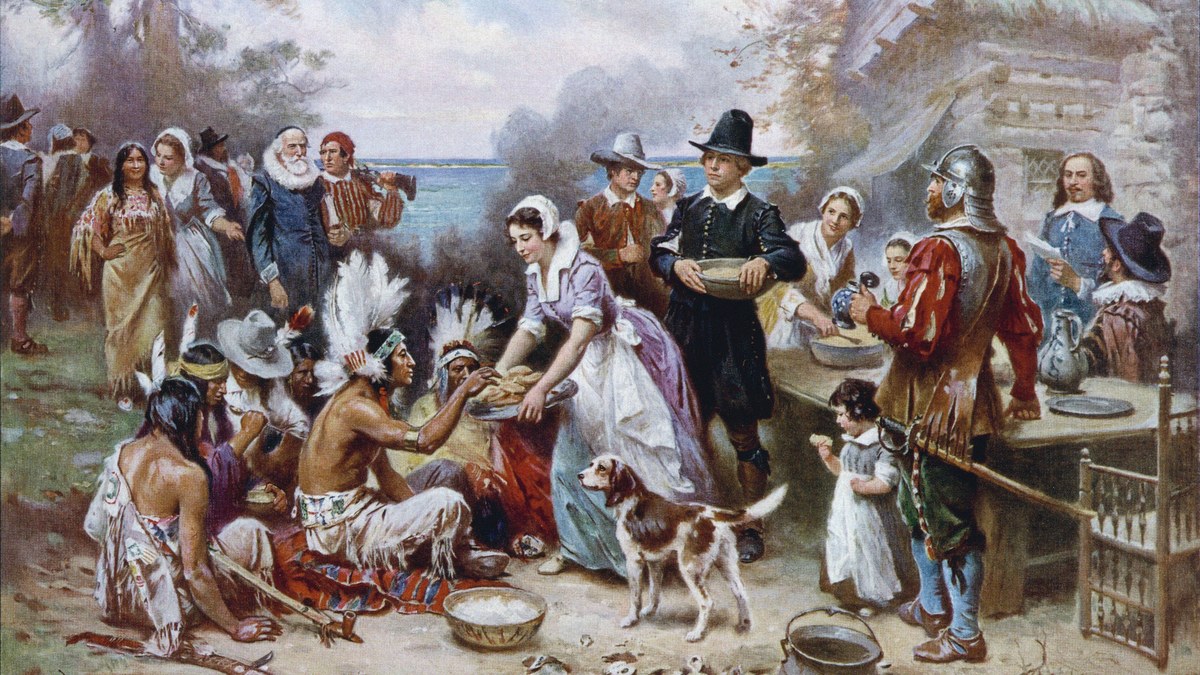
What the Pilgrims Really Ate at the First Thanksgiving
Only two firsthand accounts of the 1621 harvest feast survive. They mention deer and wild fowl, three days, and about ninety Wampanoag men. They never mention pie.
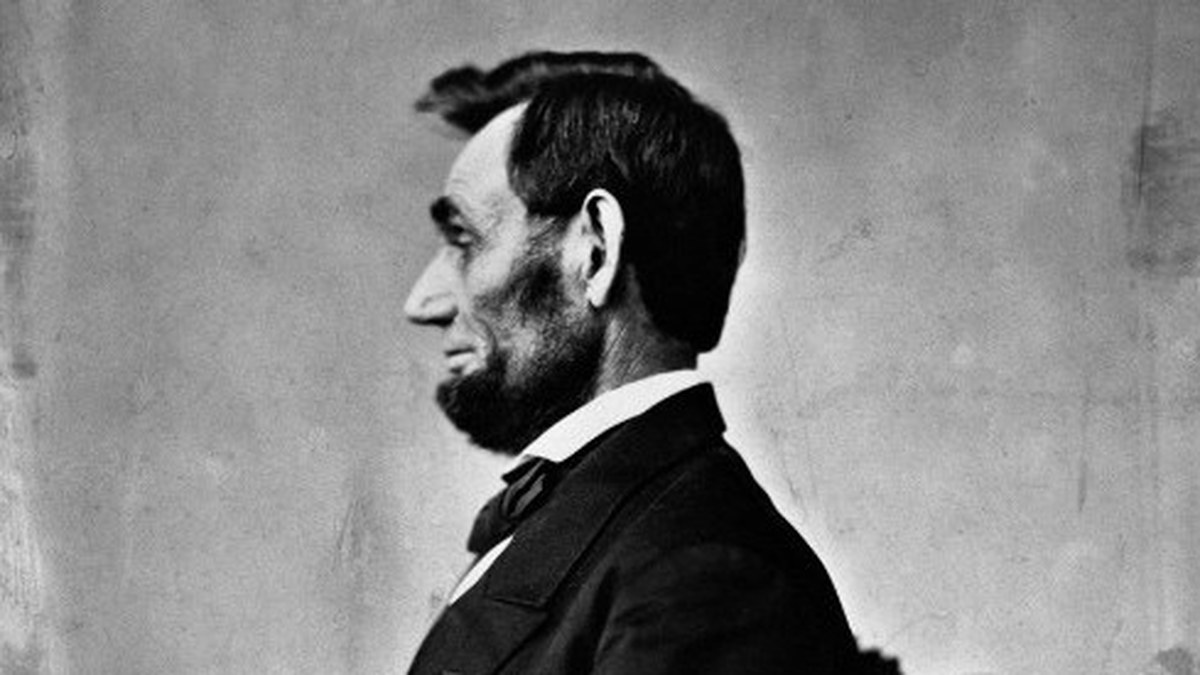
The Day Lincoln Spoke at Gettysburg
Lincoln was not the main speaker at Gettysburg. He was asked for a few remarks after a two-hour oration. What happened on November 19, 1863, and what came after.
Did Paul Revere Really Shout "The British Are Coming"?
The line everyone learned isn't in any of Revere's own accounts. What he did that night, in his own words, is a better story than the poem.