How Did George Washington Die? His Last Day in 1799
A ride in the snow, a sore throat, and less than a day of illness. How George Washington died on December 14, 1799, from the account of the man who sat with him.
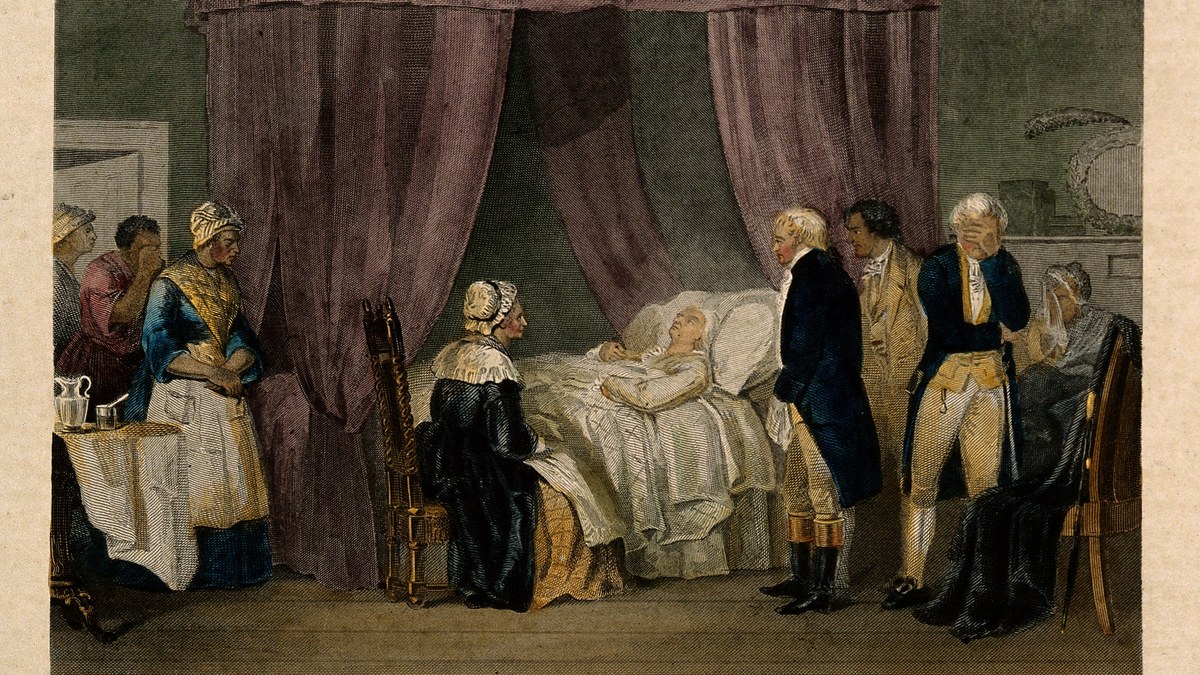
The last thing George Washington wrote in his diary was a weather report.
"Morning Snowing & abt. 3 Inches deep," he noted on Friday, December 13, 1799. "Wind at No. Et. & Mer. at 30." By the end of the next day, he was dead.
The short answer: a sudden throat illness that made it harder and harder for him to breathe. Exactly what it was is still debated. He was 67. The longer answer comes from Tobias Lear, his secretary, who was with him nearly every hour and wrote it all down. Lear's accounts are now at the National Archives' Founders Online, and Mount Vernon has studied them closely.
Thursday: a ride in bad weather
On Thursday, December 12, Washington rode out to check on his farms at about ten in the morning. "Soon after he went out," Lear wrote, "the weather became very bad, rain hail and snow falling alternately, with a cold wind."
More American Memories
Explore Our "Remember When" Archive of Treasured Decades →He did not get home until after three. Lear noticed that his neck looked wet and that snow was hanging in his hair. He came to dinner without changing his clothes.
Mount Vernon is careful about what that means. The cold and the wet clothes may have played a part, but that is speculation. The record does not show that the ride caused what came next.
Friday: a sore throat
On Friday, he had a sore throat. He went out anyway in the afternoon, once the snow had stopped, to mark some trees for cutting between the house and the river.
By evening he was hoarse, and he declined to take anything for it: "you know I never take anything for a Cold. Let it go as it came."
Saturday, 2 a.m.: he could barely speak
Between two and three in the morning on Saturday, December 14, Washington woke his wife, Martha. He told her he was very unwell. She could tell that he could scarcely speak and that he was struggling to breathe.
At daybreak, Caroline, an enslaved woman who worked in the house, came in to light the fire. Martha sent her to get Lear.
Washington wanted to be bled, which was a standard treatment at the time. Before any doctor arrived, Lear sent for George Rawlins, an overseer on the estate who was used to doing it. In Lear's account, Rawlins took about half a pint.
They tried to give him a mixture of molasses, vinegar, and butter for his throat. He could not swallow it. Lear wrote that he seemed close to suffocating.
The doctors
Dr. James Craik arrived in the morning. A messenger had also gone for Dr. Gustavus Brown of Port Tobacco, Maryland. Around 11, worried that Brown would not come in time, Craik sent for a third doctor, Elisha Cullen Dick. Dick arrived about three in the afternoon, and Brown soon after.
They did what the medicine of 1799 called for. They put a blister of cantharides on his throat. They had him gargle vinegar and sage tea and breathe steam from vinegar and hot water. They gave him an enema, calomel, and tartar emetic to make him vomit. And they bled him again, more than once.
How much blood did they take? That is still argued. A total of about 80 ounces is often repeated, but it is a later estimate. One recent medical review says the records only prove more than about 44 ounces. The first and last amounts are written down. The ones in between are not.
The doctors also discussed cutting an opening in his windpipe to help him breathe. Sources disagree about which doctor proposed it.
Saturday evening: "I die hard"
In the late afternoon, Washington asked Martha to bring his two wills. He looked them over, gave her one to burn, and kept the other.
Around five, he spoke to Dr. Craik. "Doctor, I die hard; but I am not afraid to go," Lear recorded him saying. A little later, he thanked the doctors for their care and asked them to let him go quietly.
At about ten, he gave Lear his last instructions. "Have me decently buried; and do not let my body be put into the vault in less than three days after I am dead." Lear signaled that he would. Washington asked, "Do you understand me?" Lear said he did. "Tis well," Washington said.
He died between ten and eleven that night, in the bedchamber at Mount Vernon. Lear and Dr. Craik were with him. Martha sat near the foot of the bed. Christopher Sheels, the enslaved man who served as his valet, stood by the bed. Caroline, Molly, and Charlotte, enslaved women of the household, stood near the door.
What killed him
His doctors called it "cynanche trachealis," an old term for a dangerous swelling of the throat. Lear, writing the next day, called it quinsy.
Today, a leading explanation is acute epiglottitis, a fast bacterial infection that swells the flap at the top of the windpipe until a person cannot breathe. Mount Vernon's overview names it. Other doctors have suggested an abscess near the tonsils or diphtheria. The question is still open.
After
He was buried in the family tomb at Mount Vernon on December 18, four days after he died. On December 26, at a memorial before Congress in Philadelphia, Henry Lee called him first in war, first in peace, and first in the hearts of his countrymen.
One more correction, since it comes up every time: George Washington did not have wooden teeth. Mount Vernon says his dentures were made from human and animal teeth, ivory, and metal.
-
🏛️
The bedchamber where Washington died, Mount Vernon, Virginia: mountvernon.org ↗
-
🏛️
The Old Tomb and the New Tomb, where he has rested since 1831: mountvernon.org ↗
-
🏛️
His only surviving complete set of dentures, in the Donald W. Reynolds Museum at Mount Vernon: mountvernon.org ↗
-
🏛️
Tobias Lear's accounts of the death, Founders Online, National Archives: founders.archives.gov ↗
Join the Conversation
"Have you ever visited Mount Vernon, or is it on your list?"
DailyVibeX American History Community
- Founders Online (National Archives), Tobias Lear's narrative accounts of the death of George Washington: https://founders.archives.gov/documents/Washington/06-04-02-0406-0001 ↗
- Founders Online (National Archives), George Washington's diary, December 13, 1799: https://founders.archives.gov/documents/Washington/01-06-02-0008-0012-0013 ↗
- Founders Online (National Archives), Tobias Lear to Alexander Hamilton, December 15, 1799: https://founders.archives.gov/documents/Hamilton/01-24-02-0087 ↗
- George Washington's Mount Vernon, "The Death of George Washington": https://www.mountvernon.org/library/digitalhistory/digital-encyclopedia/article/the-death-of-george-washington ↗
- George Washington's Mount Vernon, death overview: https://www.mountvernon.org/george-washington/death ↗
- George Washington's Mount Vernon, "Tobias Lear Tells the Tale of Washington's Death": https://www.mountvernon.org/george-washington/death/tobias-lear-tells-the-tale-of-washingtons-death ↗
- George Washington's Mount Vernon, "Tis Well": https://www.mountvernon.org/library/digitalhistory/past-projects/quotes/article/tis-well ↗
- George Washington's Mount Vernon, Christopher Sheels: https://www.mountvernon.org/library/digitalhistory/digital-encyclopedia/article/christopher-sheels-1776 ↗
- George Washington's Mount Vernon, the Washingtons' Bedchamber: https://www.mountvernon.org/estate-gardens/mansion/washingtons-bedchamber ↗
- George Washington's Mount Vernon, the Tombs: https://www.mountvernon.org/the-estate-gardens/the-tombs ↗
- George Washington's Mount Vernon, "First in War, First in Peace": https://www.mountvernon.org/library/digitalhistory/digital-encyclopedia/article/first-in-war-first-in-peace-and-first-in-the-hearts-of-his-countrymen ↗
- George Washington's Mount Vernon, Washington's teeth: https://www.mountvernon.org/george-washington/health/washingtons-teeth ↗
- National Library of Medicine, "At Journey's End": https://www.nlm.nih.gov/exhibition/georgewashington/exhibition5.html ↗
- National Park Service, George Washington: https://www.nps.gov/people/georgewashington.htm ↗
- National Archives, 200th anniversary release: https://www.archives.gov/press/press-releases/2000/nr00-10 ↗
- U.S. House of Representatives, History, Art and Archives, Washington memorial, December 26, 1799: https://history.house.gov/HistoricalHighlight/Detail/36398 ↗
- Historical Society of Pennsylvania, Tobias Lear journal: https://hsp.org/history-online/digital-history-projects/tobias-lear-journal-account-death-george-washington ↗
- University of Michigan, Clements Library, Lear's account: https://clements.umich.edu/exhibit/death-in-early-america/washington-lincoln/lear-account/ ↗
- The Papers of George Washington, University of Virginia, Wallenborn, "George Washington's Terminal Illness": https://washingtonpapers.org/resources/articles/illness/ ↗
- Mackowiak, Clinical Infectious Diseases (2021): https://academic.oup.com/cid/article/72/10/1850/5901784 ↗
- Scheidemandel, JAMA Otolaryngology: https://jamanetwork.com/journals/jamaotolaryngology/fullarticle/606405 ↗
- Library of Congress, N. Currier, "Death of Washington, Dec: 14. A.D. 1799," 1846: https://www.loc.gov/resource/pga.08580/ ↗
Sponsored Historical & Heritage Features
Step Into Pine Hollow: 20 Complete American Stories
Warm, character-rich tales of small-town resilience, family heirlooms, and neighborly kindness.
Explore All 20 Stories →More Surprising American History
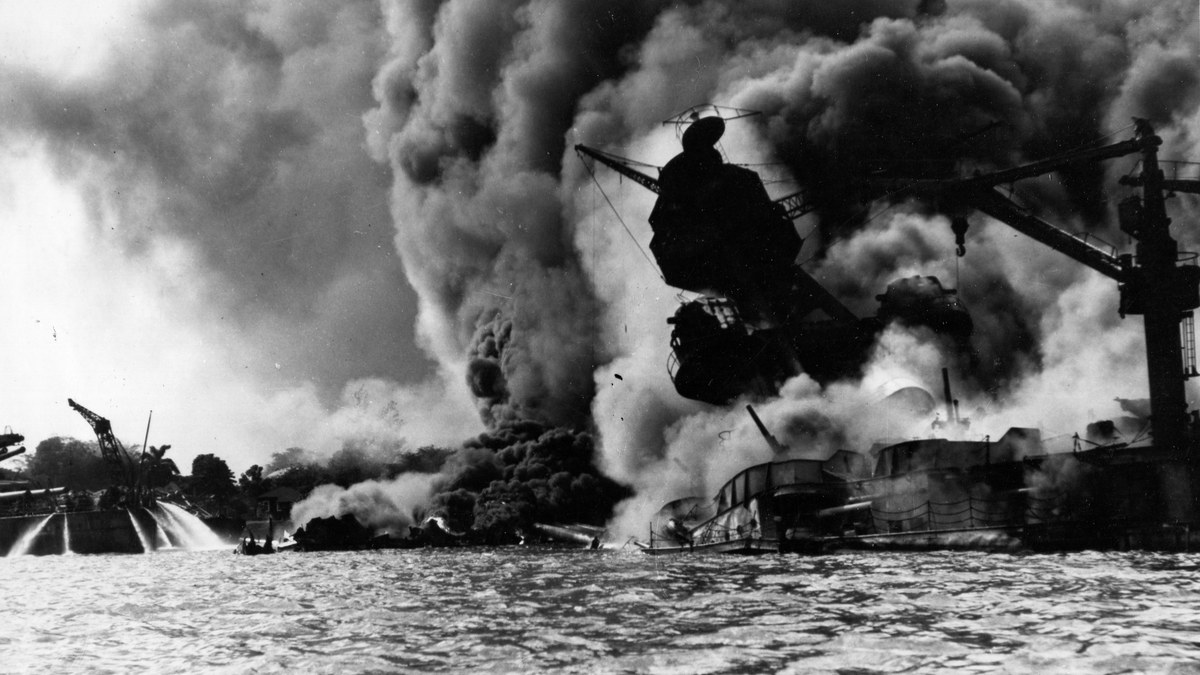
Pearl Harbor at 85: The Morning of December 7, 1941
A submarine sighted at 6:37 a.m. A radar blip at 7:02. The first planes at 7:55. Eighty-five years later, the morning of December 7, 1941, as the record tells it.
Did Paul Revere Really Shout "The British Are Coming"?
The line everyone learned isn't in any of Revere's own accounts. What he did that night, in his own words, is a better story than the poem.
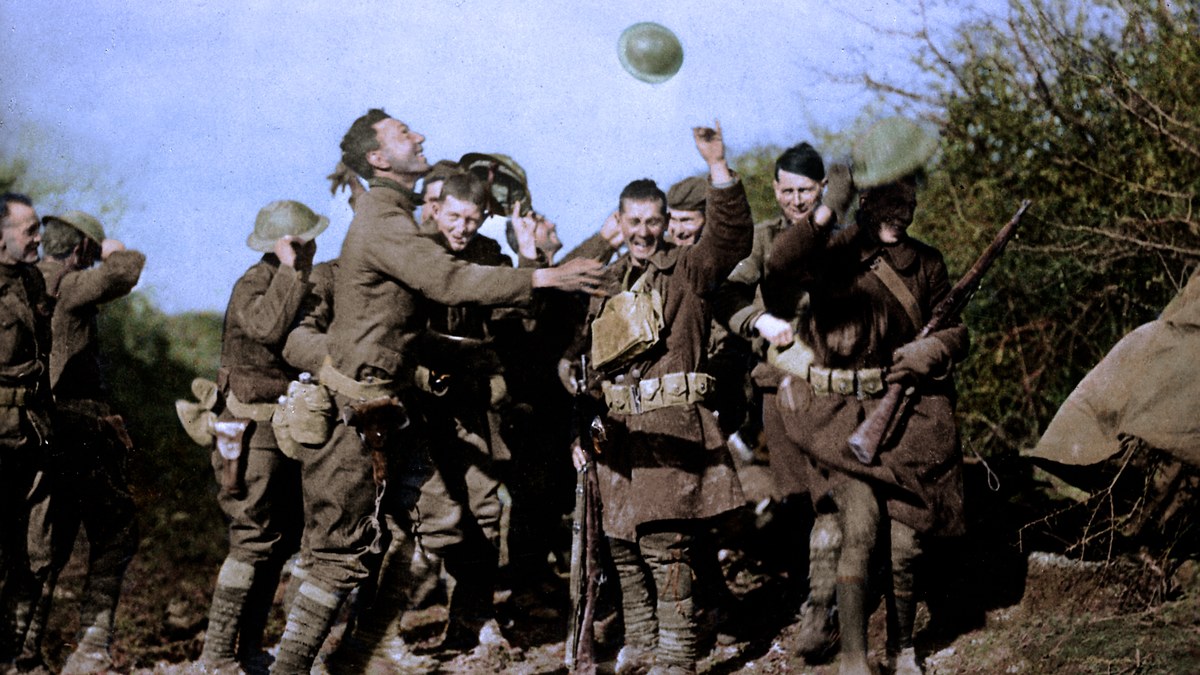
Why Veterans Day Is on November 11
The date comes from one hour in 1918. The name came from a veteran in Birmingham, Alabama. And for a few years in the 1970s, the holiday wasn't in November at all.