Rosa Parks and December 1, 1955: In Her Own Words
She was 42, a department store tailor's assistant, and the secretary of the Montgomery NAACP. What happened on the Cleveland Avenue bus, from the police report and in her own words.
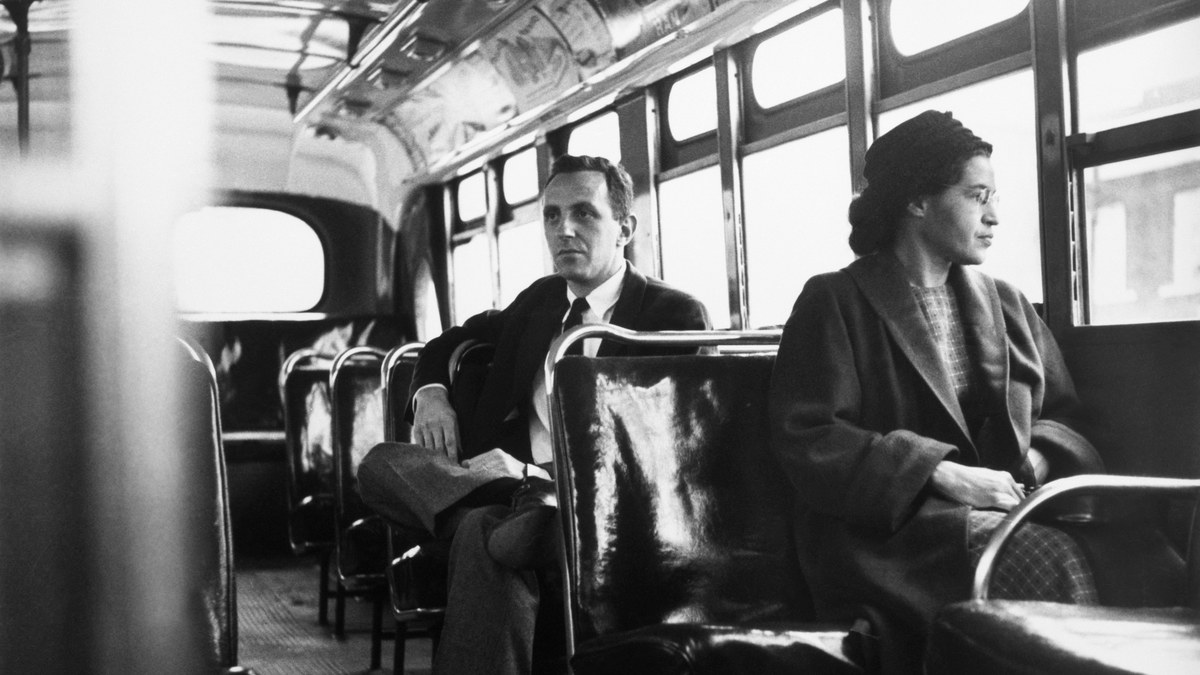
The police report is short. It puts the time at 6:06 p.m. on Thursday, December 1, 1955, and the place in front of the Empire Theatre on Montgomery Street in Montgomery, Alabama. It names the bus driver, J.F. Blake, and two officers, F.B. Day and D.W. Mixon. It says a Black woman on the bus had refused to obey the driver's order to give up her seat.
Her name was Rosa Parks. She was 42.
A familiar version of the story describes a seamstress too tired to stand after a long day of work. Parks corrected that story herself. "The only tired I was," she wrote in her 1992 autobiography, "was tired of giving in."
Who she was that evening
Parks worked at the Montgomery Fair department store downtown as an assistant tailor. She was also a seasoned civil rights worker. She had been secretary of the Montgomery branch of the NAACP since 1943. That August, she had spent two weeks at a desegregation workshop at the Highlander Folk School in Monteagle, Tennessee.
More American Memories
Explore Our "Remember When" Archive of Treasured Decades →She had also met this driver before. The Library of Congress notes that in 1943, Blake had made her get off his bus and reenter through the back door.
The bus
In a radio interview the next spring, Parks said she left work about 6 o'clock. She boarded a Cleveland Avenue bus downtown, at Court Square.
On Montgomery buses, the first 10 seats were reserved for white riders. Black riders sat behind them, and the line between the two sections could move back as the bus filled. Parks took a seat in the first row behind the white section.
When the bus reached the Empire Theatre, the driver told the four Black passengers in Parks's row to give up their seats for white riders, according to the arrest records at the National Archives. Three moved. She did not.
The driver called the police. Officers Day and Mixon arrested her. The charge, as the report puts it, was refusing to obey the orders of the bus driver. She was booked, fingerprinted, and held at the city jail.
In her own words
Parks explained herself many times over the years.
"I felt that, if I did stand up, it meant that I approved of the way I was being treated, and I did not approve," she said, in words the National Park Service quotes.
Later, in her 1994 book "Quiet Strength," she put it more plainly: "I did not get on the bus to get arrested; I got on the bus to go home."
In handwritten notes she kept about the arrest, now in the Library of Congress, she wrote of "what the criminal Jim Crow had done to one life multiplied millions of times over these United States and the world."
She was not the first. Nine months earlier, on March 2, 1955, a 15-year-old named Claudette Colvin had refused to give up her seat on a Montgomery bus and been arrested.
Four days
That night, E.D. Nixon bailed her out, with the help of Clifford and Virginia Durr.
By the next day, the Women's Political Council, led by Jo Ann Robinson, was turning out leaflets calling for a one-day boycott of the buses on Monday, December 5, the day of Parks's trial. The National Park Service puts the number at 50,000.
On December 5, Parks was tried and found guilty. The penalty was a $10 fine and $4 in court costs. That afternoon, local leaders formed the Montgomery Improvement Association and elected a young minister named Martin Luther King Jr. as its president. That evening, at a mass meeting at Holt Street Baptist Church, the crowd voted to keep the boycott going.
381 days
It lasted more than a year. Parks herself was not a plaintiff in the federal lawsuit that finally won the case. Attorney Fred Gray filed Browder v. Gayle on February 1, 1956. In June 1956, a federal court ruled that segregated seating on Montgomery buses was unconstitutional. On November 13, 1956, the Supreme Court affirmed.
The court's order reached Montgomery on December 20, and the boycott ended that day, 381 days after it began. On December 21, the buses ran integrated.
There is one more correction worth making. The well-known photograph of Rosa Parks being fingerprinted is usually captioned as her arrest on December 1. The Library of Congress identifies it as February 22, 1956, when she was arrested again, along with dozens of others, under Alabama's anti-boycott law.
After Montgomery
In 1957, Parks and her husband, Raymond, moved to Detroit. From 1965 to 1988, she worked in the office of Representative John Conyers. Congress awarded her its Gold Medal in 1999.
She died in Detroit on October 24, 2005, at 92. On October 30 and 31, her casket lay in honor in the Rotunda of the U.S. Capitol. The Congressional Record described her as the first woman to receive that tribute. In 2013, a bronze statue of her was unveiled in National Statuary Hall.
-
🏛️
The bus, now identified as No. 2857, at The Henry Ford in Dearborn, Michigan: thehenryford.org ↗
-
🏛️
The Rosa Parks Museum, Troy University, 252 Montgomery Street, Montgomery, Alabama: troy.edu ↗
-
🏛️
"Rosa Parks: In Her Own Words," Library of Congress online exhibition and papers: loc.gov ↗
-
🏛️
The arrest records, National Archives: archives.gov ↗
-
🏛️
The Rosa Parks statue, National Statuary Hall, U.S. Capitol: aoc.gov ↗
Join the Conversation
"Who first told you the story of Rosa Parks, and how did they tell it?"
DailyVibeX American History Community
- National Archives, "Arrest Records of Rosa Parks": https://www.archives.gov/education/lessons/rosa-parks ↗
- National Archives Catalog, diagram of the bus showing where Rosa Parks was seated (NAID 596069): https://catalog.archives.gov/id/596069 ↗
- National Archives Catalog, Browder v. Gayle case records: https://catalog.archives.gov/id/10571886 ↗
- National Archives, district court judgment, Browder v. Gayle: https://www.archives.gov/files/education/lessons/images/alabama-judgment.pdf ↗
- National Archives, Prologue, "The Montgomery Bus Boycott": https://prologue.blogs.archives.gov/2015/11/30/the-montgomery-bus-boycott/ ↗
- Historical Thinking Matters (George Mason and Stanford), police report transcription: https://historicalthinkingmatters.org/rosaparks/1/sources/27/fulltext/index.html ↗
- Library of Congress, Today in History, December 1: https://www.loc.gov/item/today-in-history/december-01/ ↗
- Library of Congress, "Rosa Parks: In Her Own Words," introduction: https://www.loc.gov/exhibitions/rosa-parks-in-her-own-words/about-this-exhibition/ ↗
- Library of Congress, "The Bus Boycott": https://www.loc.gov/exhibitions/rosa-parks-in-her-own-words/about-this-exhibition/the-bus-boycott/ ↗
- Library of Congress, "Rosa Parks Arrested": https://www.loc.gov/exhibitions/rosa-parks-in-her-own-words/about-this-exhibition/the-bus-boycott/rosa-parks-arrested/ ↗
- Library of Congress, "Incarceration at Montgomery City Jail": https://www.loc.gov/exhibitions/rosa-parks-in-her-own-words/about-this-exhibition/the-bus-boycott/incarceration-at-montgomery-city-jail/ ↗
- Library of Congress, "Browder v. Gayle": https://www.loc.gov/exhibitions/rosa-parks-in-her-own-words/about-this-exhibition/the-bus-boycott/browder-v-gayle-class-action-lawsuit-bus-situation/ ↗
- Library of Congress, "Alabama Anti-Boycott Act": https://www.loc.gov/exhibitions/rosa-parks-in-her-own-words/about-this-exhibition/the-bus-boycott/alabama-anti-boycott-act/ ↗
- Library of Congress, fingerprint photograph record: https://www.loc.gov/pictures/item/94500293/ ↗
- Library of Congress Magazine, 2020, Rosa Parks issue: https://www.loc.gov/lcm/pdf/LCM_2020_0102.pdf ↗
- Library of Congress, "Remembering Rosa Parks": https://www.loc.gov/static/portals/families/documents/RememberingRosaParks.pdf ↗
- Smithsonian National Portrait Gallery, "Rosa Parks: Pioneer of Civil Rights": https://npg.si.edu/learn/classroom-resource/rosa-parks-pioneer-civil-rights ↗
- Smithsonian NMAAHC, "Jo Ann Robinson": https://nmaahc.si.edu/explore/stories/jo-ann-robinson-heroine-montgomery-bus-boycott ↗
- National Park Service, Rosa Parks biography: https://www.nps.gov/people/rosa-parks.htm ↗
- National Park Service, "Places of Rosa Parks": https://www.nps.gov/articles/000/places-of-rosa-parks.htm ↗
- National Park Service, "Montgomery Bus Boycott": https://www.nps.gov/articles/montgomery-bus-boycott.htm ↗
- National Park Service, Selma to Montgomery National Historic Trail, Rosa Parks: https://www.nps.gov/semo/learn/historyculture/rosa-parks.htm ↗
- Bill of Rights Institute, Rosa Parks radio interview transcript, April 1956: https://billofrightsinstitute.org/activities/rosa-parkss-account-of-the-montgomery-bus-boycott-radio-interview-april-1956/ ↗
- Stanford King Institute, "Montgomery Bus Boycott": https://kinginstitute.stanford.edu/montgomery-bus-boycott ↗
- Stanford King Institute, "MIA Forms; Elects King President": https://kinginstitute.stanford.edu/mia-forms-elects-king-president ↗
- Stanford King Institute, Holt Street Baptist Church mass meeting: https://kinginstitute.stanford.edu/king-papers/documents/mia-mass-meeting-holt-street-baptist-church ↗
- Stanford King Institute, "Bus Desegregation Mandate Arrives; MIA Ends Boycott": https://kinginstitute.stanford.edu/bus-desegregation-mandate-arrives-mia-ends-boycott ↗
- Supreme Court of the United States, U.S. Reports, vol. 352: https://www.supremecourt.gov/pdfs/USReports/USREPORTS-352_PDFA.pdf ↗
- Alabama, "Mrs. Rosa L. Parks Day": https://www.servealabama.gov/mrs-rosa-l-parks-day ↗
- Congress, Public Law 106-26 (Congressional Gold Medal): https://www.congress.gov/106/plaws/publ26/PLAW-106publ26.htm ↗
- Congressional Record, November 9, 2005: https://www.congress.gov/109/crec/2005/11/09/151/148/CREC-2005-11-09-pt1-PgE2317-3.pdf ↗
- Architect of the Capitol, "Lying in State or in Honor": https://www.aoc.gov/what-we-do/programs-ceremonies/lying-in-state-honor ↗
- Architect of the Capitol, Rosa Parks statue: https://www.aoc.gov/explore-capitol-campus/art/rosa-parks-statue ↗
- The Henry Ford, Rosa Parks bus: https://www.thehenryford.org/collections/explore/artifact/316872 ↗
- The Henry Ford, "Curating and Preserving the Rosa Parks Bus": https://www.thehenryford.org/collections/explore/articles/curating-and-preserving-the-rosa-parks-bus ↗
Sponsored Historical & Heritage Features
Step Into Pine Hollow: 20 Complete American Stories
Warm, character-rich tales of small-town resilience, family heirlooms, and neighborly kindness.
Explore All 20 Stories →More Surprising American History
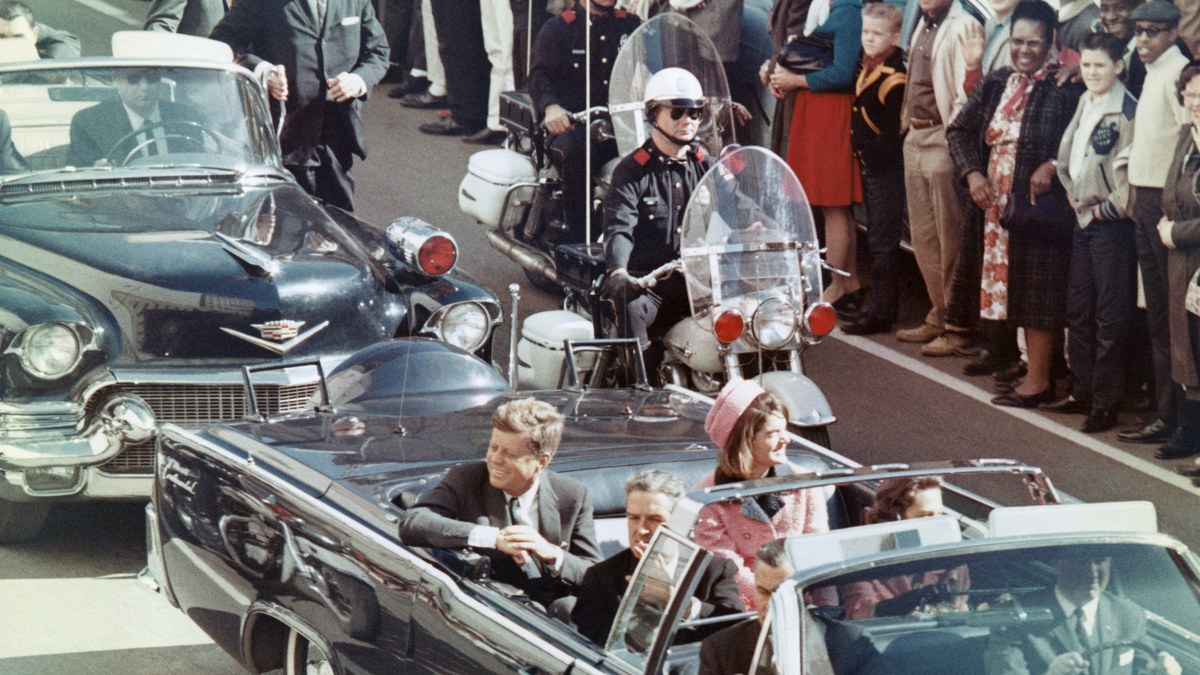
November 22, 1963: The Day in Dallas, Hour by Hour
From a rally in the rain in Fort Worth to an oath aboard Air Force One, the documented record of November 22, 1963, hour by hour.
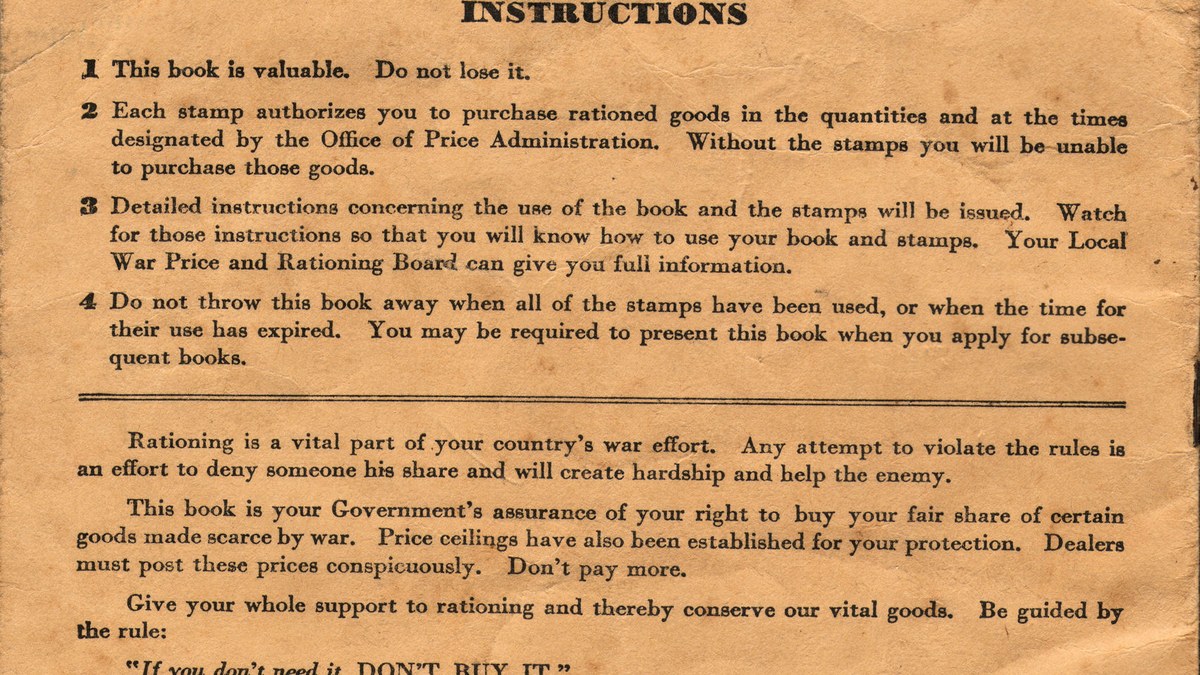
When America Rationed Coffee: November 29, 1942
On November 29, 1942, Americans over 15 could buy one pound of coffee every five weeks, starting with stamp No. 27. Here is why, and how the country made it last.
Did Paul Revere Really Shout "The British Are Coming"?
The line everyone learned isn't in any of Revere's own accounts. What he did that night, in his own words, is a better story than the poem.